

You step on the scale and the number is down. That should feel like a win. But something feels off — your clothes fit a little differently, your arms look thinner, and you feel a bit… softer somehow, even though you weigh less.
This is one of the most frustrating and least talked-about experiences in weight loss. You did the work. You ate less. You moved more. And yet the result doesn’t look quite right. The problem isn’t your effort — it’s that weight loss and fat loss are not the same thing, and most fitness advice treats them as if they are.
When you lose weight without a strategic plan, roughly 25% of what you lose can come from muscle, not fat — according to research cited by Harvard Medical School. That means for every 10 lbs lost, as much as 2.5 lbs might be muscle tissue you actually wanted to keep.
This guide will show you exactly how to lose fat without losing muscle — using home-based workouts, smart nutrition choices, and the right kind of cardio. No gym required. No extreme diet. Just a clear, three-part strategy that actually works.
Key Takeaways
- Without a strategic approach, up to 25% of weight lost during a calorie deficit can be muscle mass, not fat — even when exercising regularly
- Resistance training 2–3 times per week is the single most effective tool for preserving muscle while losing fat
- Adults actively trying to lose fat while maintaining muscle should aim for 0.7–1g of protein per pound of body weight daily — significantly higher than standard recommendations
- The optimal fat loss rate for muscle preservation is 0.5–1 lb per week — faster than this dramatically increases muscle loss risk
- Cardio type matters: low-to-moderate intensity cardio (walking, cycling) supports fat loss without the muscle-breakdown risk of excessive high-intensity work
- Results from a combined strength and cardio approach typically become visible in 4–6 weeks; body composition changes precede scale changes
Fat Loss vs Weight Loss — Why the Difference Matters

Most people use these two terms interchangeably, but they describe completely different things — and mixing them up is the source of a lot of confusion and disappointment.
Weight loss means your total body mass is decreasing. This includes fat, muscle, water, and even bone density over time. You can lose weight rapidly by severely restricting calories, but a significant portion of that loss will come from muscle and water — not the fat you were targeting.
Fat loss means you’re specifically reducing your body fat percentage while preserving (or even increasing) muscle mass. This is what almost everyone actually wants — to look leaner, feel stronger, and have a body composition that supports long-term health. Fat loss is slower than weight loss. It requires more strategy. And it’s dramatically more sustainable.
The scale alone cannot tell you which one you’re doing. Someone can lose 10 lbs in two weeks on a crash diet and look and feel worse than someone who lost 5 lbs over two months through a structured program. This is why how you lose matters as much as how much you lose.
Sportzillax editor note: If your goal is to “get toned” — that’s fat loss, not weight loss. Toning is just the visible result of having less fat over the same (or more) muscle. You can’t achieve it by eating less alone.
Why You Lose Muscle When You’re Losing Fat
Understanding the mechanism here takes away the mystery — and makes the solution obvious.
When you eat in a calorie deficit (consuming less than your body needs), your body needs to find energy somewhere. It starts with glycogen — the stored carbohydrate energy in your muscles and liver. Once that runs low, it turns to fat. But here’s the part most people don’t know: it also turns to muscle protein as a backup energy source, especially when the deficit is large or when strength training isn’t happening to signal that the muscle is needed.
Your body is remarkably efficient at survival. Muscle tissue is metabolically expensive — it costs calories just to maintain. If your body senses that you’re not using your muscles under load (resistance training), it interprets them as unnecessary and begins breaking them down for energy. This process accelerates when:
- Your calorie deficit is too aggressive (more than 500–750 calories below maintenance)
- You’re doing only cardio without strength training
- Your protein intake is too low to support muscle repair
- You’re losing weight too quickly
The solution is not to avoid a calorie deficit — you need one to lose fat. The solution is to manage it intelligently alongside the right training and nutrition strategy.
Step 1: Strength Training — The Non-Negotiable for Keeping Muscle
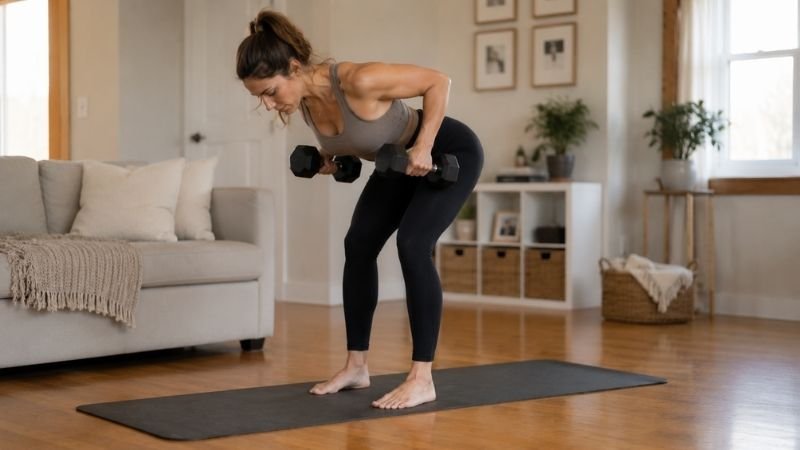
If there’s one thing the research agrees on, it’s this: resistance training is the single most powerful tool for preserving muscle mass during a calorie deficit. A 2021 meta-analysis in the Journal of the Academy of Nutrition and Dietetics found that combining caloric restriction with resistance training resulted in significantly greater fat loss and muscle preservation compared to caloric restriction alone.
The mechanism is straightforward. When you perform resistance training — whether with weights, resistance bands, or your bodyweight — you send a signal to your body that your muscles are being used and need to be maintained. Your body responds by prioritizing fat as the energy source rather than muscle protein.
You do not need a gym for this to work. Two to three sessions of resistance training per week, done consistently at home, is sufficient to preserve muscle during fat loss for most beginners and intermediate exercisers.
How to Do This at Home Without a Gym
The most effective home-based resistance training exercises for muscle preservation during fat loss are compound movements — exercises that work multiple muscle groups simultaneously:
- Squats and goblet squats — quads, glutes, hamstrings, core
- Push-ups (modified or full) — chest, shoulders, triceps, core
- Dumbbell Romanian deadlifts — hamstrings, glutes, lower back
- Dumbbell rows (bent-over or single-arm) — back, biceps, core
- Glute bridges with dumbbell — glutes, hamstrings, lower back
- Dumbbell shoulder press — shoulders, triceps
Two to three full-body sessions per week using these movements, with progressive overload over time, is the minimum effective dose for muscle preservation.
If you need a complete structured plan, our Full Body Dumbbell Workout at Home: The Complete Beginner’s 3-Day Plan gives you exactly this — every exercise explained, three days a week, no bench required.
Step 2: Protein — How Much You Actually Need (Not Just a Number)
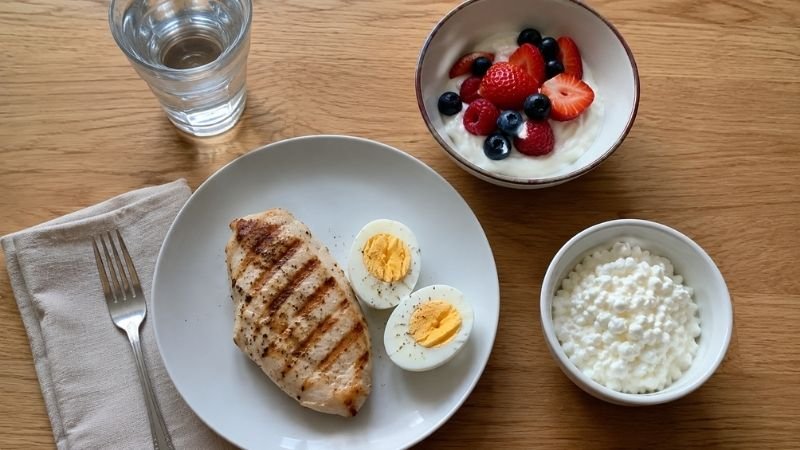
Protein is the building material for muscle. Without enough of it, your body cannot repair or maintain muscle tissue even when you’re strength training consistently. During a calorie deficit, protein requirements go up — not down — because your body is under greater metabolic stress.
The standard dietary guideline for protein is 0.8 grams per kilogram of body weight. But this baseline is designed for sedentary adults maintaining weight. If you’re actively trying to lose fat while preserving muscle and doing resistance training, research consistently points to a higher target: 1.6–2.2 grams of protein per kilogram of body weight (approximately 0.7–1g per pound).
For a 150 lb person, that’s roughly 105–150 grams of protein per day.
Simple High-Protein Foods That Work for Busy People
You don’t need protein shakes or complicated meal prep. These are some of the most accessible high-protein foods:
| Food | Serving Size | Protein |
|---|---|---|
| Chicken breast (cooked) | 3 oz | ~26g |
| Greek yogurt (plain, 0%) | 1 cup | ~17–20g |
| Eggs | 2 large | ~12g |
| Canned tuna | 3 oz | ~20g |
| Cottage cheese | ½ cup | ~14g |
| Lentils (cooked) | ½ cup | ~9g |
| Edamame | ½ cup | ~9g |
The practical target: aim to include a meaningful protein source at every meal and most snacks. You don’t need to count obsessively — just make protein the anchor of each eating occasion rather than an afterthought.
Sportzillax editor note: Protein also keeps you fuller for longer, which makes maintaining your calorie deficit significantly easier. It’s doing double duty — preserving muscle AND helping you eat less without feeling deprived.
Step 3: Lose Fat Slowly — Here’s What “Slowly” Actually Means
This is the step that most people resist most strongly — because slowing down feels counterintuitive when you’re motivated and want results now.
The research is clear: faster weight loss means more muscle loss. A deficit of 500–750 calories below your maintenance level, producing approximately 0.5–1 lb of weight loss per week, is the sweet spot for fat loss with muscle preservation. Lose faster than this — through extreme restriction or excessive cardio — and a greater proportion of what you’re losing will be muscle.
This pace feels slow when you’re used to seeing dramatic results on extreme diets. But consider: at 1 lb per week, that’s 52 lbs of primarily fat loss in a year — not weight loss that’s half muscle. That’s an entirely different body composition outcome.
Practical ways to manage your deficit at home:
- Reduce portion sizes moderately rather than eliminating food groups
- Add protein to meals to increase satiety without large calorie additions
- Focus on reducing liquid calories first (sweetened drinks, alcohol, large amounts of juice)
- Track food intake for 1–2 weeks to get an accurate baseline — most people are surprised by the reality
What’s the Best Cardio for Fat Loss Without Losing Muscle?
Cardio is beneficial for fat loss — but the type and amount matter more than most people realize, especially when muscle preservation is a priority.
The risk with excessive cardio: Very high volumes of cardio (particularly long, intense sessions) increase cortisol (the stress hormone), which can promote muscle breakdown. Running for 90 minutes daily while in a calorie deficit is one of the fastest ways to lose muscle alongside fat.
The cardio sweet spot for fat loss without muscle loss:
- Walking is genuinely one of the most effective fat-loss tools available. A 30–45 minute brisk walk burns 150–250 calories, has near-zero muscle breakdown risk, and can be done daily without compromising recovery.
- Low-to-moderate intensity cardio (steady cycling, light jogging, elliptical) 2–3 times per week for 20–40 minutes complements strength training without competing with it.
- HIIT (2x per week maximum) produces a strong afterburn effect with shorter sessions — but more than 2 sessions per week can interfere with strength training recovery for beginners.
The optimal combination: 3 strength sessions + 3–5 walks per week + 1–2 HIIT sessions if desired. This structure maximizes fat burning while giving your muscles sufficient recovery time to maintain and grow.
For a complete beginner HIIT routine you can do at home in 20 minutes, see our Beginner HIIT Workout at Home guide.
How to Know If You’re Losing Fat or Muscle (Signs to Watch)

The scale alone can’t answer this question. Here are practical indicators:
Signs you’re losing fat (good):
- Clothes fitting looser, particularly around your waist and hips
- Strength staying the same or increasing in your workouts
- Energy levels stable or improving
- Waist measurement decreasing over weeks
Signs you might be losing too much muscle (concerning):
- Noticeable strength decreases — exercises that felt manageable now feel harder
- Looking “softer” even as the scale goes down
- Fatigue that feels different from normal workout soreness
- Losing weight very rapidly (more than 2 lbs per week consistently)
If you’re noticing the concerning signs, the adjustments are straightforward: reduce your calorie deficit slightly, increase protein intake, and make sure resistance training is happening at least twice a week.
How Long Does It Take to Lose Fat and See Results?
This is one of the most searched questions around fat loss — and the honest answer is longer than most people want to hear, but shorter than most people fear.
With a consistent approach (strength training 2–3x/week, adequate protein, moderate calorie deficit):
- Week 1–2: Mostly water weight and glycogen changes. Scale may drop quickly — this is not fat loss.
- Week 3–4: Actual fat loss begins to show in the rate of scale change. Energy and performance start adapting.
- Week 4–6: Physical changes begin to become visible — how clothes fit, muscle definition starting to emerge.
- Week 8–12: Meaningful, visible body composition changes. This is when most people “see” results in photos and measurements.
- 3–6 months: Significant transformation in body composition for most people who are consistent.
The frustrating truth: the first month rarely looks dramatic. The second and third months are where the compound effect of consistent work starts to show. Most people quit somewhere in month one. The people who keep going into month two and three are the ones who get results.
When You Only Have 10 Minutes
On the days when everything falls apart and you have exactly 10 minutes, here’s the minimum effective dose for muscle preservation:
Pick 2–3 compound exercises. Do 3 sets of each. Move with focus and control.
Option A (Lower body + push):
- Goblet squats — 3×12
- Push-ups — 3×10
- Glute bridges — 3×15
Option B (Upper body + hinge):
- Dumbbell rows — 3×10 per side
- Romanian deadlifts — 3×12
- Shoulder press — 3×10
Ten focused minutes of resistance training sends the muscle-preservation signal your body needs. It’s not optimal, but it’s genuinely better than nothing — and it keeps the habit alive for the next day when you have more time.
Warning Signs to Watch For
Talk to your doctor or a healthcare professional if you experience:
- Extreme fatigue that doesn’t improve with rest and proper nutrition
- Hair loss beyond normal shedding during a calorie deficit
- Persistent weakness or difficulty completing activities that were previously easy
- Significant mood changes, anxiety, or depression alongside calorie restriction
- Any symptoms of disordered eating — obsessive food tracking, extreme restriction, binge-restrict cycles
Aggressive fat loss approaches, particularly combined with very high exercise volumes, can have real health consequences. Sustainable fat loss with muscle preservation is a marathon, not a sprint — and there’s no version of it that should feel punishing.
Frequently Asked Questions
Can you lose fat and gain muscle at the same time? Yes — but primarily for beginners and those returning after a break. This is called body recomposition. When you’re new to resistance training, your body can simultaneously build muscle and lose fat even in a slight calorie deficit, because the training stimulus is so new that muscle growth happens efficiently. After the beginner phase (roughly 6–12 months of consistent training), simultaneous muscle gain and fat loss becomes harder and requires more precise nutrition management.
Why am I not losing belly fat even though I’m working out? Spot reduction — losing fat from a specific area — is a fitness myth. Your body decides where it loses fat based on genetics and hormones, not which exercises you do. Belly fat, particularly visceral fat, is often the last to go. The solution is consistent overall fat loss through calorie deficit, strength training, and adequate protein — belly fat will follow over time. Cortisol (stress hormone) also promotes belly fat storage, so managing stress and sleep matters here.
How long does it take to lose fat? With a consistent approach — moderate calorie deficit, strength training 2–3x/week, adequate protein — visible body composition changes typically appear in 4–6 weeks. Significant transformation takes 3–6 months. The scale may show changes earlier, but visible muscle tone and fat reduction take time for the body to express.
Does cardio burn muscle? Excessive cardio in a calorie deficit can contribute to muscle loss — particularly long, intense sessions done frequently without adequate protein and recovery. Moderate amounts of cardio (3–4 sessions of 20–40 minutes per week) alongside resistance training and sufficient protein do not cause significant muscle loss for most people. Walking, in particular, has minimal muscle-breakdown risk and can be done daily.
What’s the best cardio for fat loss without losing muscle? Walking is the most underrated fat loss tool — low cortisol impact, can be done daily, burns meaningful calories over time. For structured cardio, low-to-moderate intensity sessions (cycling, light jogging) 2–3x per week complement strength training well. HIIT 1–2x per week provides additional metabolic benefit without excessive recovery demands. The key is not overdoing any one type.
How much protein do I need to lose fat without losing muscle? For active individuals in a calorie deficit focused on preserving muscle, aim for 0.7–1 gram of protein per pound of body weight (approximately 1.6–2.2g per kilogram). This is higher than standard dietary guidelines, which are designed for sedentary maintenance rather than active fat loss.
Your Next Step
You now have a complete, research-backed approach to losing fat without losing muscle — the three-part strategy of resistance training, adequate protein, and a moderate calorie deficit, combined with smart cardio choices.
The place to start: pick one thing from this guide that you’re not currently doing and implement it this week. Just one. Add a protein source to breakfast. Do 20 minutes of bodyweight training three times this week. Go for a 30-minute walk every day.
Start small. Stay consistent. The compound effect of these small changes is everything.
If you’ve been working out but not seeing the fat loss results you expected, read this: → Why You’re Working Out But Not Losing Weight (7 Real Reasons)
If you’re ready to start a structured strength training plan at home to protect your muscle while losing fat: → Full Body Dumbbell Workout at Home: The Complete Beginner’s 3-Day Plan
For a cardio complement that won’t eat into your muscle gains: → Beginner HIIT Workout at Home: 20 Minutes, No Equipment, Real Results
References
- Barakat, C., et al. (2020). Body Recomposition: Can Trained Individuals Build Muscle and Lose Fat at the Same Time? Strength & Conditioning Journal.
- Stokes, T., et al. (2018). Recent Perspectives Regarding the Role of Dietary Protein for the Promotion of Muscle Hypertrophy with Resistance Exercise Training. Nutrients.
- Harvard Health Publishing. Trying to lose weight? Be careful not to lose muscle. https://www.health.harvard.edu/exercise-and-fitness/trying-to-lose-weight-be-careful-not-to-lose-muscle
- National Institutes of Health (NIH), National Library of Medicine. Dietary protein and muscle mass. https://www.ncbi.nlm.nih.gov/pmc/articles/PMC6566799/
- Willis, L.H., et al. (2012). Effects of aerobic and/or resistance training on body mass and fat mass in overweight or obese adults. Journal of Applied Physiology.