
Before anything else, let’s say the thing that most postpartum fitness content won’t say:
You do not need to “bounce back.”
That phrase — bounce back — implies that your pre-pregnancy body was the correct version and your postpartum body is a problem to be solved. It isn’t. Your body just grew, carried, and delivered a human being. It deserves recovery, not a race back to a previous state.
That said: wanting to feel stronger, more energetic, and comfortable in your body again is completely valid. It’s not vanity. It’s not selfishness. It’s a reasonable thing to want — and it’s possible, on a timeline that’s realistic rather than punishing.
This guide covers how to lose weight after pregnancy honestly — what to expect at each stage, what actually works for postpartum belly fat, how breastfeeding changes the equation, what C-section recovery means for your approach, and how to fit meaningful movement into a life that now revolves around a newborn. No crash diets. No six-week transformation promises. Just real information and practical steps.
Key Takeaways
- Most women lose 10–13 lbs immediately after delivery (baby, placenta, amniotic fluid) — this is not fat loss, it’s delivery
- Realistic postpartum fat loss rate: 0.5–1 lb per week after clearance to exercise, with a healthy diet — faster than this typically means muscle and milk supply loss alongside fat
- The American College of Obstetricians and Gynecologists (ACOG) recommends waiting until your 6-week postpartum checkup before beginning structured exercise (8–12 weeks for C-section)
- Postpartum belly fat is a combination of remaining subcutaneous fat, weakened abdominal muscles, and (in some cases) diastasis recti — each requires a different approach
- Breastfeeding burns approximately 300–500 extra calories daily but this is not a free pass for weight loss — caloric restriction while nursing can reduce milk supply and impair recovery
- It typically takes 6–12 months to return to pre-pregnancy weight — and this is a healthy, normal timeline
What Actually Happens to Your Weight After Giving Birth
Understanding the timeline helps manage expectations — and eliminates a lot of unnecessary anxiety.
Immediately after delivery: Most women lose 10–13 lbs — baby (typically 7–8 lbs), placenta (1–2 lbs), and amniotic fluid (1–2 lbs). This happens regardless of what you eat or do.
First week: Your body continues releasing retained fluid from pregnancy. You may lose another 5 lbs or so as your kidneys work harder. This is also not fat loss.
Weeks 2–6: Weight stabilizes. You’re now at your actual “starting point” for postpartum fat loss — what’s left is real adipose tissue (fat) that your body accumulated during pregnancy.
After 6-week clearance: With medical clearance, appropriate exercise, and reasonable nutrition, fat loss can begin properly. The realistic rate is 0.5–1 lb per week — not 5 lbs, not 10 lbs.
6–12 months: This is the typical realistic window for returning to pre-pregnancy weight, and research shows that many women need the full year. If you’re still significantly above your pre-pregnancy weight at 12 months, speaking with your healthcare provider is worthwhile.
Sportzillax editor note: The images you see of new moms looking like they never gave birth at 6 weeks postpartum are the statistical outliers — or they’ve had help they’re not disclosing. They are not the norm, and they are not the benchmark.
Postpartum Belly Fat: What It Actually Is and How to Address It
This is the topic most postpartum articles gloss over, but it’s what most new moms are actually asking about. Let’s be specific.
“Postpartum belly” is not one thing. It’s typically a combination of:
Remaining subcutaneous fat: Actual fat tissue that accumulated during pregnancy to support the baby. This is the component that responds to caloric deficit and exercise over time.
Weakened abdominal muscles: Your abs stretched significantly during pregnancy. They’re still there — they just need reconditioning. This contributes to a softer, rounder appearance that isn’t purely fat.
Diastasis recti (in some women): A separation of the two sections of the rectus abdominis muscle at the midline. This creates a visible “pooch” that doesn’t respond to normal ab exercises and can actually worsen with traditional core work like crunches or sit-ups. If you notice a ridge or “coning” down the center of your abdomen during movement, this may be diastasis recti — worth discussing with your doctor or a pelvic floor physiotherapist.
The approach to each:
For subcutaneous fat: patient, consistent caloric deficit (300–400 calories below maintenance) combined with regular movement. This takes months, not weeks.
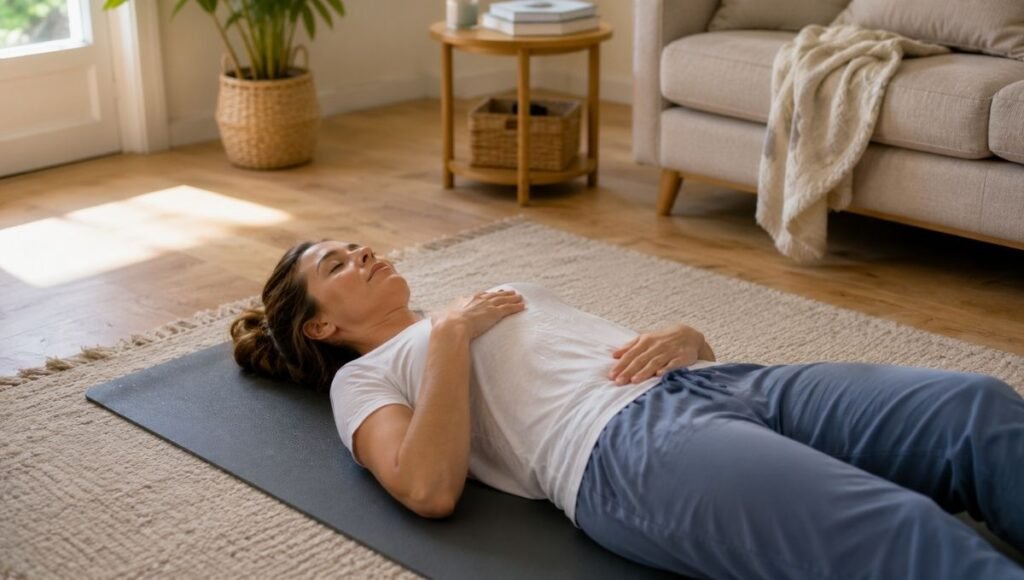
For weakened abdominal muscles: safe core reconditioning, starting with pelvic floor reconnection and deep core exercises (diaphragmatic breathing, dead bugs, heel slides) before progressing to more challenging movements. See our Beginner Core Workout guide for safe, postpartum-appropriate core exercises.
For diastasis recti: specific rehabilitation exercises, avoidance of movements that increase intra-abdominal pressure (crunches, sit-ups, heavy lifting), and potentially pelvic floor physiotherapy.
When Can You Start Exercising to Lose Weight After Pregnancy?
The honest answer: it depends on your delivery and how your recovery is progressing.
After vaginal delivery: Gentle movement — walking, pelvic floor exercises, deep breathing — can typically begin within the first 1–2 weeks. Structured exercise (strength training, cardio circuits) is generally cleared at your 6-week postpartum appointment. Don’t start structured exercise before this checkup, even if you feel ready.
After C-section: A C-section is major abdominal surgery. Your recovery timeline is longer and involves surgical wound healing, not just soft tissue recovery. Most doctors recommend waiting 8–12 weeks before beginning core-engaging or higher-intensity exercise. Walking is encouraged from the first week, but anything that puts strain on the abdominal wall needs more time.
The signal that you’re ready: Your 6-week (or 8–12 week for C-section) appointment with your doctor or midwife, who will assess your healing. Don’t rush this. Starting too early doesn’t accelerate results — it risks injury and delays your ability to train consistently.
How to Lose Weight After Pregnancy at Home: A Month-by-Month Guide
Once you have medical clearance, here’s a realistic progression for home-based postpartum weight loss.
Month 1–2 Post-Clearance: Foundation
Focus: Reconnect your core and pelvic floor. Begin light movement. Do not focus on calorie burning yet.
What to do:
- Pelvic floor exercises (Kegels) — 3 sets of 10 daily, can be done anywhere
- Diaphragmatic breathing — 5 minutes before any exercise session
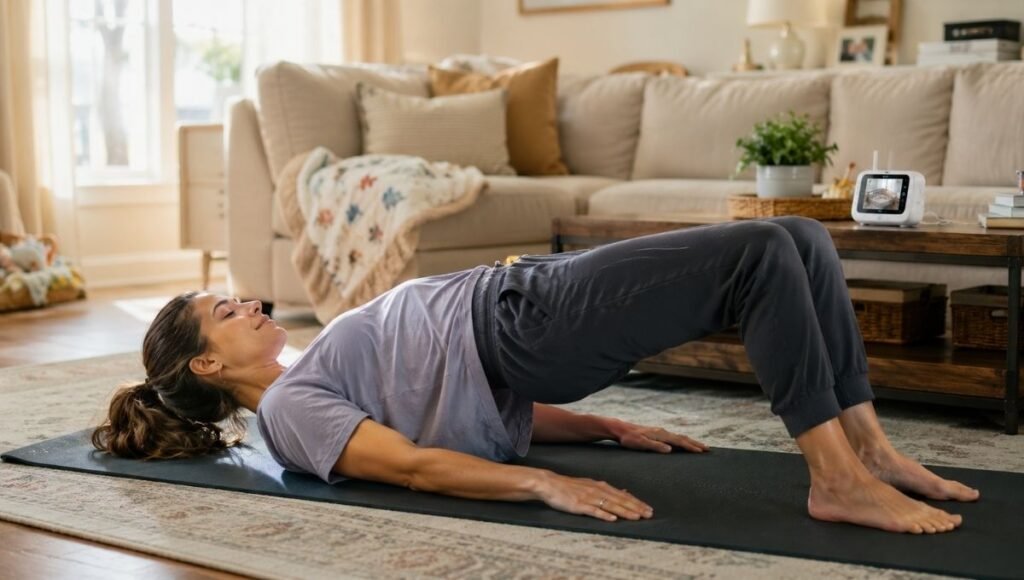
- Heel slides and glute bridges — gentle core reactivation
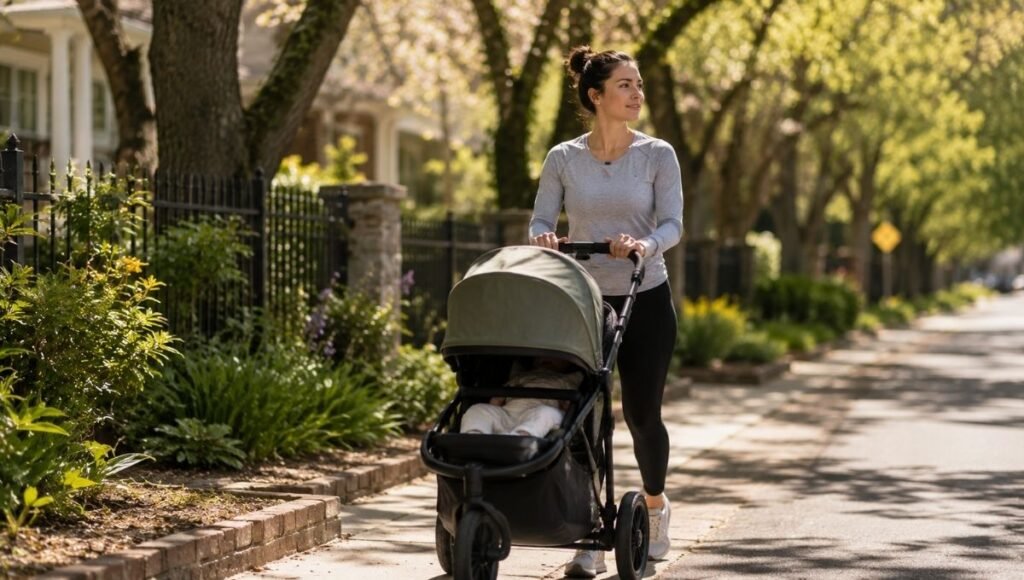
- Walking — 15–20 minutes daily, building to 30 minutes by week 4
- Light postpartum yoga if desired
What to skip: Crunches, sit-ups, heavy lifting, high-impact cardio, HIIT. These come later.
This phase is not exciting. It won’t feel like “real” exercise. But it’s the foundation that allows everything else to work safely.
For a complete day-by-day plan for this phase, see our Postpartum Workout Plan.
Month 3–4: Build
Focus: Add structured strength training. Increase walking duration and pace.
What to do:
- Full-body bodyweight circuit, 3 days per week (20–25 minutes)
- Walking 25–30 minutes most days
- Continue pelvic floor work
Sample bodyweight circuit (3 rounds):
- Bodyweight squat — 12 reps
- Modified push-up — 10 reps
- Glute bridge — 15 reps
- Bird dog — 8 per side
- Step-up (using a sturdy chair) — 10 per leg
Month 5–6: Progress
Focus: Add resistance (light dumbbells or resistance bands). Begin introducing more structured fat loss approach.
What to do:
- 3 strength sessions per week with light weights
- 2–3 low-impact cardio sessions (walking, home cardio circuits)
- Moderate caloric deficit if breastfeeding has reduced or ended
By month 6 of consistent training, most women notice meaningful changes in strength, muscle tone, and body composition — even if the scale hasn’t fully reflected it yet.
Postpartum Weight Loss While Breastfeeding: What You Need to Know

Breastfeeding and weight loss have a complicated relationship — and the internet oversimplifies both sides of it.
The calorie burn is real: Breastfeeding burns approximately 300–500 extra calories per day. Over a week, this is a meaningful energy expenditure.
But aggressive restriction is counterproductive: If you create too large a calorie deficit while nursing, several things happen: milk supply may decrease, energy levels drop significantly (making exercise harder), and your body may hold onto fat stores as a protective response.
The practical approach for breastfeeding moms:
- Don’t drop calories dramatically. Focus on food quality rather than restriction.
- Eat adequate protein (0.7–1g per pound of body weight daily) — supports milk production and muscle recovery.
- Stay well hydrated — aim for 2.5–3 liters of water daily; breastfeeding increases fluid needs significantly.
- Let the natural calorie burn of breastfeeding do some of the work, while exercise builds your strength and metabolic rate over time.
- As breastfeeding reduces or ends, adjust caloric intake accordingly — the extra appetite you’ve had while nursing will naturally decrease.
Weight loss while exclusively breastfeeding is possible but slower than after weaning. This is normal and not a failure of your approach.
How to Lose Weight After C-Section: Special Considerations
C-section recovery involves healing from major abdominal surgery — and this changes what’s appropriate, especially for belly fat reduction.
The abdominal shelf: Many C-section moms notice a “shelf” or overhang above the incision scar. This is a combination of remaining fat and scar tissue adhesion, and it can persist longer than general postpartum belly fat. It typically improves with time, core reconditioning, and in some cases, scar tissue massage (introduced after full healing, typically 6+ weeks).
Core exercises and the C-section scar: Avoid any exercise that causes pulling at the incision site. As the scar heals, gentle scar tissue massage (circular motions around the scar, not directly on it initially) can help with tissue mobility. A pelvic floor physiotherapist can guide you on this specifically.
Timeline for core reconditioning: More conservative than vaginal delivery. Wait for 8–12 week clearance, then begin with the same pelvic floor and deep core foundation — but progress more slowly. Your abdominal wall has been surgically opened; it needs more time to rebuild the strength to support more challenging movements.
Walking: The best early exercise after C-section. Short walks from the first week, gradually increasing duration. Walking supports recovery, reduces the risk of blood clots, and begins the gentle reconditioning process without putting strain on the healing abdominal layers.
Postpartum Weight Loss Tips for New Moms: The Non-Exercise Side
Exercise is only part of the postpartum weight loss picture. These nutrition and lifestyle factors matter equally.
Protein at every meal: Protein supports muscle repair, keeps you full longer, and is the most metabolically expensive macronutrient to process. Aim for a meaningful protein source at every meal — eggs, chicken, fish, Greek yogurt, cottage cheese, legumes.
Don’t skip meals: New moms often go hours without eating because there’s no time. This leads to energy crashes, increased cortisol (which promotes fat storage), and overeating later. Even if you can’t sit down for a full meal, keep accessible protein-rich snacks nearby — Greek yogurt, hard-boiled eggs, cheese and crackers, a handful of nuts.
Sleep when you can: Sleep deprivation directly impairs fat metabolism and raises hunger hormones. You can’t control your newborn’s sleep schedule — but on the nights your baby sleeps longer, prioritize your own sleep over exercise. A well-rested mom who exercises 3 days a week will outperform an exhausted mom who exercises 5 days.
Manage expectations with the scale: Postpartum weight fluctuates significantly with water retention, hormonal shifts, and breastfeeding. Weigh yourself weekly at the same time of day (morning, after bathroom, before eating) for the most consistent comparison. Monthly waist measurements and how your clothes fit tell a more complete story than daily scale readings.
What to Do When You Only Have 15 Minutes
The most common postpartum reality: the baby is asleep and you have a small window. Here’s what to do with 15 minutes:
15-minute postpartum strength circuit (months 3+):
- 2 minutes: warm-up march in place
- 3 rounds of:
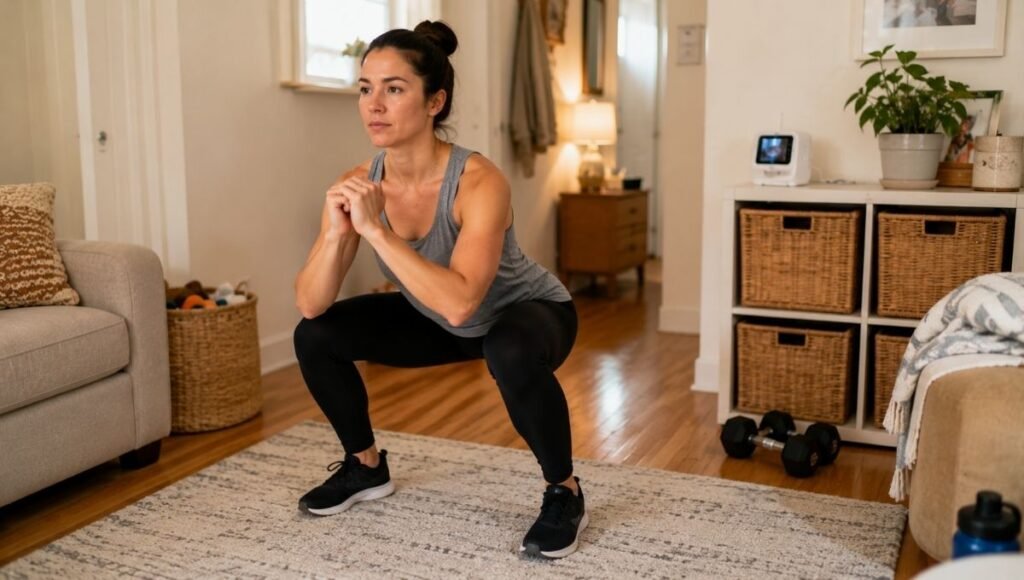
- Bodyweight squat — 10 reps
- Glute bridge — 12 reps
- Modified push-up — 8 reps
- 2 minutes: forward fold + standing quad stretch
That’s it. It counts. Three sessions like this per week, sustained over months, produces real change.
Warning Signs to Take Seriously
Stop exercising and contact your healthcare provider if you experience:
- Return of bright red bleeding that had stopped
- Pain, pressure, or heaviness in the pelvic area during or after exercise
- Any leaking (urine or stool) during exercise
- Diastasis recti symptoms worsening (increased abdominal “coning”)
- Persistent exhaustion that sleep doesn’t resolve
- Signs of postpartum depression or anxiety — exercise supports mood, but it’s not a substitute for professional support
Frequently Asked Questions
How long does it take to lose baby weight? Most women need 6–12 months to return to their pre-pregnancy weight with consistent, healthy effort. Some take longer, and this is completely normal. Research shows that women who had more weight gain during pregnancy and those who are breastfeeding typically take longer — both are healthy reasons, not failures.
What is postpartum belly fat and can you get rid of it? Postpartum belly is a combination of remaining fat tissue, weakened abdominal muscles, and (in some cases) diastasis recti. The fat responds to a calorie deficit and exercise over time. The weakened muscles respond to safe core reconditioning starting with pelvic floor work. Diastasis recti requires specific rehabilitation. With a consistent approach, most women see meaningful improvement by 6–12 months postpartum.
Can I lose weight while breastfeeding? Yes, but it’s slower than after weaning and should be approached carefully. Breastfeeding burns 300–500 extra calories daily, but aggressive caloric restriction can reduce milk supply and deplete your own energy reserves. Focus on protein-rich food quality, stay well hydrated, and let moderate exercise support fat loss gradually.
How do I lose weight after a C-section? Start with walking as soon as you feel able and have medical clearance (usually within the first 1–2 weeks). Wait for your 8–12 week postpartum appointment before beginning structured exercise. Avoid exercises that cause pulling at the incision. Begin core work slowly with pelvic floor exercises and progress very conservatively. The timeline for C-section recovery is longer, and this is appropriate — not a setback.
Why am I not losing weight postpartum even though I’m exercising? Several factors can stall postpartum weight loss: breastfeeding hormones that encourage fat retention (especially around the abdomen), sleep deprivation elevating cortisol, eating less than you think while actually eating more, or simply being in an earlier stage of recovery than your body is ready to accelerate from. Give it time, focus on consistency over intensity, and ensure your nutrition supports rather than undermines your efforts.
You’re Already Doing It
The fact that you’re reading this — thinking about your health, your body, your recovery — is already the work. The motivation is there. The commitment is there.
The only thing that needs to change is the timeline you’re measuring yourself against. Six weeks is not enough. Twelve weeks is not enough. Give yourself a year. Focus on one small, sustainable habit at a time. Trust the process.
Your body grew a human being. It will find its way — with patience, with care, and with far less judgment than the internet would have you give it.
When you’re ready to start moving again: → Postpartum Workout Plan: Your Safe, Realistic Guide to Moving Again After Baby
For safe core exercises that are postpartum-appropriate: → Beginner Core Workout at Home: 10 Safe Exercises (No Crunches Needed)
For understanding why the scale might not be moving: → Why Am I Not Losing Weight? 8 Real Reasons Your Progress Has Stalled
References
- American College of Obstetricians and Gynecologists (ACOG). Physical Activity and Exercise During Pregnancy and the Postpartum Period. https://www.acog.org/clinical/clinical-guidance/committee-opinion/articles/2020/04/physical-activity-and-exercise-during-pregnancy-and-the-postpartum-period
- Lim, S., et al. (2019). Maternal lifestyle interventions for weight loss after pregnancy: a systematic review. International Journal of Environmental Research and Public Health.
- Centers for Disease Control and Prevention (CDC). Losing Weight After Pregnancy. https://www.cdc.gov/healthyweight/healthy_eating/pregnant.html
- HealthPartners. Post pregnancy weight loss: Exercise and nutrition tips. https://www.healthpartners.com/blog/postpartum-weight-loss/