
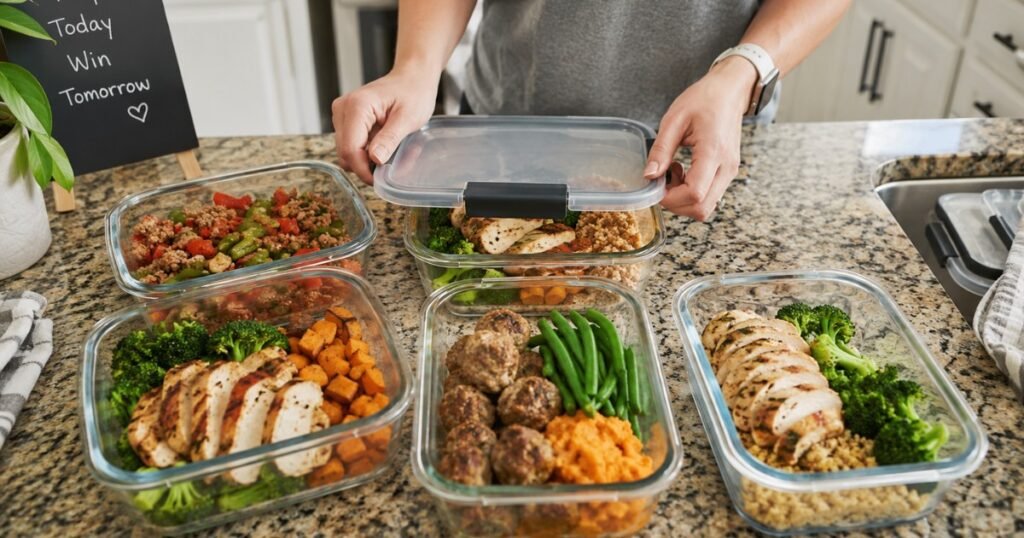
Get home after a long day, open the fridge, and realize there’s nothing ready to eat. Cooking a balanced dinner feels like one task too many, so you grab whatever is quickest—or order takeout again. You tell yourself you’ll make a better choice tomorrow, but tomorrow is just as busy. For many people trying to lose weight, this is where the plan starts to fall apart—not because they lack motivation, but because healthy food isn’t ready when they need it most.
The fix is simpler than it sounds: meal prep for weight loss. When your meals are ready ahead of time, you stop making dozens of small food decisions every day. You just open the fridge, heat something up, and eat a meal that’s already portioned, protein-rich, and calorie-appropriate. That’s not just a time-saver — it’s what actually turns “wanting to lose weight” into a habit you can stick with.
This guide is built for beginners, busy office workers, parents squeezing in home workouts between naps and school pickups, and anyone training at home without a full gym setup. Every meal idea here has been tested in a normal home kitchen using basic equipment — a stovetop, an air fryer, and a microwave. Nothing fancy required.
Quick Tip You don’t need perfect meals — you need meals that are ready before you’re hungry.
Overview: What Is Meal Prep for Weight Loss?
Meal prep for weight loss means preparing several balanced meals ahead of time so you can maintain a calorie deficit consistently, instead of relying on willpower every single day. The core approach is simple: protein first, vegetables second, smart carbs third. Prep 3–4 days at a time so everything stays fresh, and match your portions to your actual activity level rather than following an extreme, one-size-fits-all diet.
The Healthy Weight Loss Plate
- ½ non-starchy vegetables (broccoli, bell peppers, cauliflower, etc.)
- ¼ lean protein (chicken breast, tofu, fish, etc.)
- ¼ complex carbohydrates (brown rice, sweet potato, quinoa, etc.)
- A small amount of healthy fat (optional)
You don’t need to weigh every gram to make this work — this ratio alone will get most people most of the way to a controlled calorie intake.
Why Meal Prep Makes Weight Loss Easier
The hardest part usually isn’t knowing what to eat. It’s reaching 6 p.m. with no dinner plan, standing in front of the fridge, and trying to make a good choice when you’re already tired and hungry. On some nights you cook, on others you order takeout, and sometimes the snacks win before dinner even starts. Meal prep helps by removing those last-minute decisions before they have a chance to derail the day.
Meal prep removes that friction:
- Controls calories without constant tracking — portions are already set, so you’re not guessing at every meal
- Reduces takeout and impulse eating — there’s already a healthy option ready to go
- Saves real time during busy weekdays — no more standing in the kitchen at 8pm trying to figure out dinner
- Makes eating after home workouts effortless — you refuel immediately instead of skipping a meal out of exhaustion
- Builds a habit instead of relying on motivation — once the routine is set, you don’t have to talk yourself into it
The logic behind it is simple: Meal Prep → Less Decision Fatigue → Better Consistency → Sustainable Weight Loss. That’s also why most people who stick with home workouts long-term treat meal prep as part of the plan, not an extra chore on top of it.
Before You Start: Calculate Calories and Macros the Simple Way
Getting started is simpler than you might think. Break it down into these four steps.
Step 1: Estimate your daily calorie needs. Use a free online TDEE (Total Daily Energy Expenditure) calculator, enter your height, weight, age, and activity level, and you’ll get a reasonable estimate. It doesn’t need to be exact — a solid range is enough to start.
Step 2: Create a moderate calorie deficit. Eating roughly 300–500 calories below your maintenance level is a sustainable pace for most people. Cutting more than that tends to backfire — it hurts training performance and increases the odds of rebound eating.
Step 3: Prioritize protein. Protein is the nutrient beginners most often shortchange, and it’s the one that matters most for preserving muscle and staying full. A general target is 1.2–2g of protein per kilogram of bodyweight, depending on how often and how hard you train.
Step 4: Fill the rest with quality carbs and healthy fats. Carbs aren’t the enemy — they fuel your training. Fat shouldn’t be cut to zero either, since it plays a role in hormone health. Split your remaining calories between the two based on how they make you feel and perform.
How Home Workout Days Change Your Meal Plan
One thing that’s easy to overlook is that your meals don’t have to look exactly the same every day. They should change a little depending on the workout you did.
- Strength training days: These sessions burn through glycogen, so it helps to bump up complex carbs slightly to support recovery and keep your lifts strong.
- HIIT / cardio days: The priority here isn’t more carbs — it’s keeping protein consistent and staying well hydrated, since these sessions are demanding on both.
- Recovery / rest days: Lower activity means you can scale carbs down a bit and lean more on vegetables, while keeping protein steady no matter what.
Activity Level vs. Calories, Protein & Carbs
| Activity Level | Daily Calories | Protein Priority | Carb Adjustment |
|---|---|---|---|
| Strength training day | Baseline | Moderate–high | Slightly increase |
| HIIT / cardio day | Baseline | High | Keep moderate |
| Recovery / rest day | Slightly below baseline | Moderate–high | Slightly decrease |
This isn’t a rigid formula — it’s a framework. The point is simply that your plate should reflect your training, not stay identical every day of the week.
The 3 Easiest Meal Prep Methods for Beginners
There isn’t just one “right” way to meal prep. The best method depends on your schedule, your kitchen setup, and how much variety you want during the week.
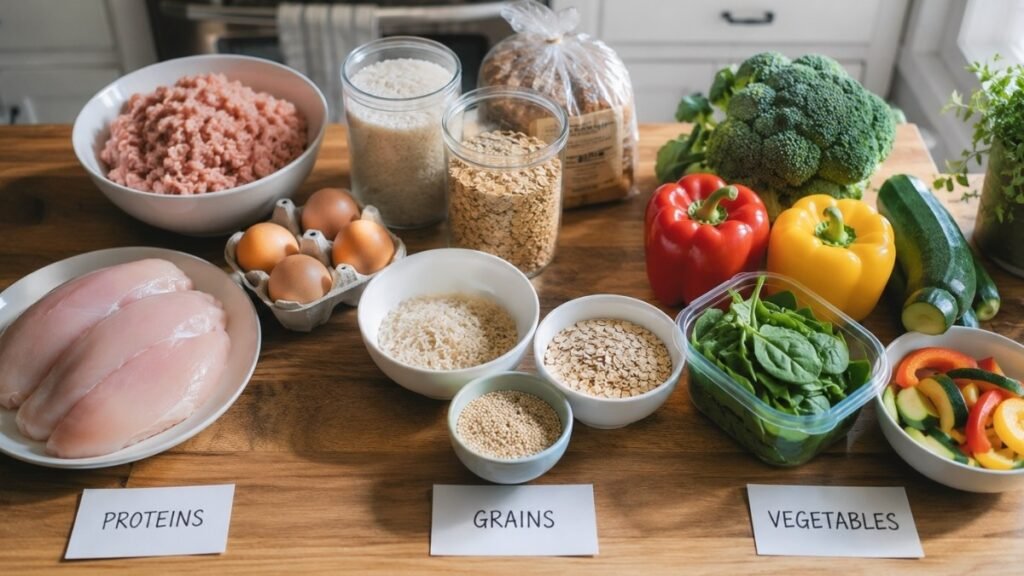
Batch Cooking
Cook a large portion once, then eat from it across several days.
Best for:
- Rice or brown rice
- A whole roasted or grilled chicken
- Chili, stews, and soups
Why it works: It’s the most time- and energy-efficient method if you’re comfortable eating similar meals a few days in a row.
Individually Portioned Meals
Prep complete grab-and-go containers ahead of time.
Best for:
- Office lunches
- Busy parents who need meals ready without a second thought
- Anyone who wants precise, easy calorie control
Why it works: There’s zero decision-making at mealtime — you just grab a container and go.
Ready-to-Cook Ingredients
Instead of prepping full meals, you prep the components.
Examples:
- Washed and chopped vegetables
- Marinated raw chicken
- Cooked rice, stored separately
- Pre-cut fruit
Why it works: Maximum flexibility — you still “cook” each day, but the time-consuming prep work is already done.
Which Method Fits Your Schedule?
| Method | Time Investment | Flexibility | Best For |
|---|---|---|---|
| Batch cooking | Moderate | Low | People fine with repeated meals |
| Individually portioned meals | Higher upfront | Medium | Office workers, parents, strict portion control |
| Ready-to-cook ingredients | Low, spread daily | High | People who want to cook daily but skip the prep work |
If you’re completely new to meal prep, start with individually portioned meals — it’s the most beginner-proof option and leaves the least room for error.
The Best Foods for Weight Loss Meal Prep
Picking the right ingredients is half the battle. Organizing by food group makes shopping and prepping much easier.
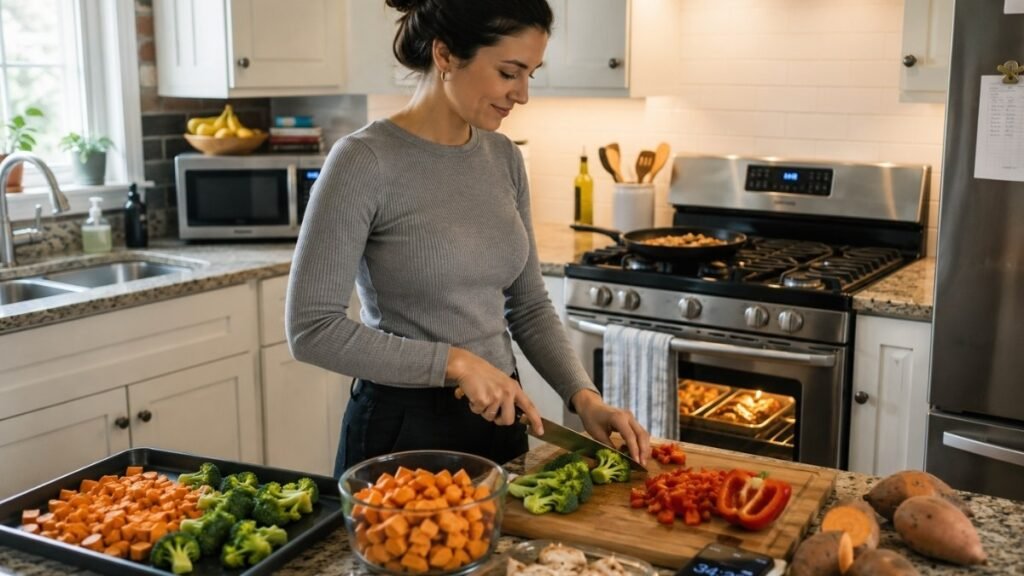
Lean Protein
Chicken breast, turkey, eggs, tuna, Greek yogurt, cottage cheese, tofu, and beans all hold up well in the fridge and reheat without losing much texture.
Smart Carbohydrates
Brown rice, potatoes, sweet potatoes, oats, quinoa, and whole wheat wraps are slow-digesting, filling, and pair well with training days.
Vegetables That Actually Stay Fresh
This is where a lot of beginners go wrong — not every vegetable is meant to sit in a container for five days.
Best vegetables for 3–5 day meal prep (they hold up well):
- Broccoli
- Carrots
- Bell peppers
- Green beans
- Cauliflower
Vegetables that turn soggy or watery quickly (add these fresh instead):
- Lettuce
- Spinach
- Tomatoes
- Cucumbers
Meal Prep Vegetable Freshness Guide
| Category | Vegetables | Recommendation |
|---|---|---|
| Green list (holds up well) | Broccoli, carrots, bell peppers, green beans, cauliflower | Safe to prep 3–5 days ahead |
| Red list (degrades quickly) | Lettuce, spinach, tomatoes, cucumbers | Add fresh right before eating |
Healthy Fats
Avocado, nuts, seeds, and olive oil round out the plate. You don’t need a lot — small amounts add flavor and help with satiety without pushing calories too high.
A Beginner-Friendly 7-Day Weight Loss Meal Prep Plan
This plan mixes strength, cardio, and recovery days so you can see how the adjustments play out in practice. Swap any protein or carb source freely — the goal is the framework, not a rigid menu.
| Day | Breakfast | Lunch | Dinner | Snack | Notes |
|---|---|---|---|---|---|
| Monday (Strength) | Oats + Greek yogurt + berries | Chicken breast + brown rice + broccoli | Salmon or tofu + sweet potato + cauliflower | Apple + a few nuts | Carbs slightly higher to support training |
| Tuesday (Cardio) | Eggs + whole wheat toast + avocado | Turkey + quinoa + bell peppers | Shrimp or beans + brown rice + green beans | Greek yogurt | Focus on protein and hydration |
| Wednesday (Recovery) | Protein smoothie | Chicken salad (add lettuce fresh) | Tofu + stir-fried vegetables (lighter on carbs) | Small handful of nuts | Vegetables take up more of the plate |
| Thursday (Strength) | Oats + banana | Beef or tofu + potato + carrots | Chicken breast + brown rice + broccoli | Low-fat cheese | Rotate proteins from Monday for variety |
| Friday (Cardio) | Eggs + whole wheat wrap | Tuna + quinoa + bell peppers | Chicken breast + sweet potato + cauliflower | Apple | Swap sauces to keep it interesting |
| Saturday (Recovery) | Greek yogurt + oats | Beans + veggie bowl (add lettuce fresh) | Fish + small portion brown rice + green beans | Nuts | Carbs slightly lower, veggies higher |
| Sunday (Prep Day) | Flexible | Flexible | Flexible | Flexible | Grocery shopping, cooking, container prep |
Note: This isn’t a template you have to follow exactly — swap chicken for tofu, rice for quinoa, whatever fits your taste, as long as you keep the underlying pattern: protein first, enough vegetables, moderate carbs.
Weekly Grocery List
Organized by category so nothing gets missed at the store:
- Protein: Chicken breast, eggs, tofu, canned tuna, Greek yogurt
- Vegetables: Broccoli, bell peppers, carrots, cauliflower, green beans
- Fruit: Apples, bananas, mixed berries
- Pantry / grains: Brown rice, oats, quinoa, whole wheat wraps
- Dairy: Low-fat cheese, Greek yogurt
- Frozen: Frozen vegetables, frozen shrimp (as a backup option)
If it helps, turn this into a printable grocery checklist you can stick on the fridge and tick off before every shopping trip — it makes it much harder to forget something or overbuy.
The 45-Minute Meal Prep Workflow (No Oven Required)
This workflow is built for apartment kitchens and beginners with limited equipment — and it’s exactly what most busy office workers actually use week to week.
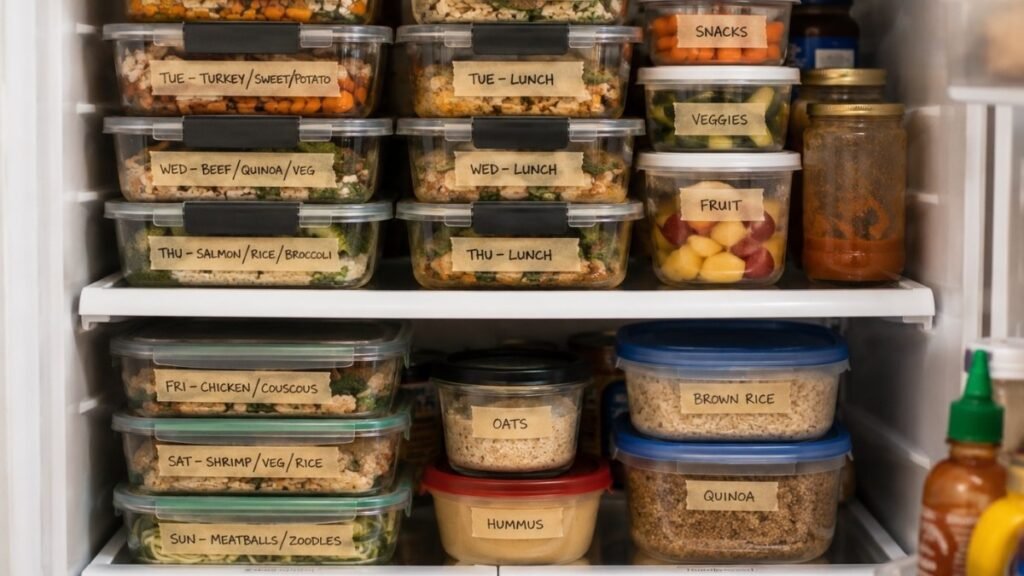
Equipment needed:
- Air fryer (optional)
- A frying pan
- A pot
- A microwave
Timeline:
- 0–10 minutes: Prep ingredients — wash, chop, and portion everything out
- 10–25 minutes: Cook your protein — pan-sear chicken, air-fry tofu, whatever fits your menu
- 20–35 minutes: Cook vegetables — steam or sauté; this can overlap with the protein step to save time
- 30–45 minutes: Assemble containers — portion everything, let it cool, then seal and refrigerate
Following this rhythm, prepping 3–4 days of meals fits comfortably into a single 45-minute session — no need to sacrifice your entire Sunday.
Match Your Meals to Your Home Workout Schedule
As mentioned earlier, training type should influence what’s on your plate. Here’s how to put that into practice.
Strength training days: These sessions deplete glycogen more than other workout types, so a slightly higher carb intake before and after training supports both energy and recovery.
HIIT days: The priority isn’t extra carbs — it’s keeping protein steady and hydration high, since these sessions are intense and sweat-heavy. Don’t forget electrolytes.
Recovery days: With lower activity, it makes sense to dial carbs back a bit and lean into vegetables for volume and fiber. Protein should stay consistent regardless of whether you trained that day.
Workout Type → Meal Adjustments
| Workout Type | Carbs | Protein | Vegetables | Notes |
|---|---|---|---|---|
| Strength training | Slightly increase | Maintain | Maintain | Supports performance and recovery |
| HIIT / cardio | Keep moderate | Maintain / slightly increase | Maintain | Prioritize hydration and electrolytes |
| Recovery / rest | Slightly decrease | Maintain | Increase | Vegetables fill the volume gap |
How to Store Meal Prep Safely
Prepping the food is only half the job — storing it safely matters just as much.
Refrigerator storage: Most cooked proteins and vegetables stay safe in the fridge for 3–4 days. Use sealed containers to prevent cross-contamination and unwanted odors mixing between foods.
Freezer storage: If you’re prepping more than 3–4 days’ worth, freeze the extra portions right away. Most cooked meals freeze well for 1–2 months — just thaw overnight in the fridge before reheating.
Reheating tips: Stir halfway through microwaving for even heating, and add a splash of water when reheating rice so it doesn’t dry out.
Foods that freeze well: Rice, stews, soups, cooked chicken breast, and beans.
Foods that don’t freeze well: Watery raw vegetables like lettuce and cucumber — they turn mushy once thawed.
Food Storage Guide
| Food Type | Refrigerator | Freezer |
|---|---|---|
| Cooked chicken / fish | 3–4 days | 1–2 months |
| Rice / brown rice | 4–6 days | 1–2 months |
| Cooked vegetables | 3–5 days | ~1 month |
| Beans | 4–5 days | 1–2 months |
| Raw watery vegetables (lettuce, etc.) | 1–2 days | Not recommended |
Common Beginner Mistakes That Ruin Weight Loss Meal Prep
Mistake 1: Starting with complicated recipes. The more complex the meal, the more likely you are to burn out. Start with three simple components — a protein, a carb, a vegetable — and build consistency before adding complexity.
Mistake 2: Cutting all carbohydrates. Carbs aren’t your enemy. Eliminating them completely tends to tank training performance and often leads to rebound overeating later.
Mistake 3: Ignoring hidden calories. Sauces, cooking oils, and even a handful of nuts add up fast — these are the calories people most often forget to count.
Mistake 4: Not measuring portions. Eyeballing your portions is an easy way to unintentionally overeat or undereat. Use a food scale for at least the first few weeks to calibrate your instincts.
Mistake 5: Preparing too many meals at once. Prepping seven identical days of food at once often backfires — the repetition gets tiring, and people quit halfway through. Start with 3–4 days instead.
Mistake 6: Using the wrong containers. Cheap plastic containers can warp under heat and affect food texture over time — glass, divided containers hold up much better.
Warning Perfect meal prep isn’t necessary. Consistent meal prep is what actually gets you results.
Keep Meal Prep Interesting Without Eating the Same Thing Every Day
This is the single biggest reason people abandon meal prep — not lack of willpower, but genuine food fatigue from eating the same flavors day after day.
- Change your seasoning blends: The same chicken breast tastes completely different with cumin, curry, or teriyaki seasoning.
- Swap sauces instead of whole meals: Keep the base ingredients the same, but change the sauce — it’s the easiest way to get variety without extra effort.
- Rotate your protein sources: Chicken one week, tofu or fish the next. It’s better for your nutrition and keeps your taste buds engaged.
- Change how you cook the same ingredients: Pan-searing, roasting, and air-frying give the exact same ingredients very different textures and flavors.
- Build mix-and-match bowls: Store protein, carbs, and vegetables separately, then combine them differently each day instead of committing to one fixed combo.
High-protein, low-calorie sauce ideas:
- Greek yogurt ranch
- Salsa
- Cottage cheese sauce
- Mustard yogurt dressing
High-Calorie Sauce vs. High-Protein Swap
| Common High-Calorie Sauce | Why It’s Heavy | High-Protein Swap |
|---|---|---|
| Mayonnaise / creamy dressing | High fat content | Greek yogurt ranch |
| Thick cheese sauce | Calorie-dense | Cottage cheese sauce |
| Sweet chili sauce | High sugar content | Salsa |
| Thousand Island | High in both fat and sugar | Mustard yogurt dressing |
Swapping a sauce takes almost zero extra prep time, but it does a lot of heavy lifting when it comes to keeping the same weekly meals feeling fresh.
Budget-Friendly Meal Prep Tips for Weight Loss
Eating well for weight loss doesn’t have to be expensive — a little planning actually saves money.
- Buy frozen vegetables. Nutritionally similar to fresh, more shelf-stable, and cheaper overall.
- Choose seasonal produce. In-season fruits and vegetables are typically cheaper and fresher.
- Cook once, eat multiple times. Fewer cooking sessions means lower time and energy costs.
- Use beans to stretch your protein. They’re inexpensive and pair well with smaller portions of meat.
- Shop store brands. Quality is often comparable to name brands at a lower price.
- Plan ahead to reduce food waste. Shopping with a specific weekly plan means less food goes bad before you get to it.
Essential Meal Prep Tools Worth Buying
You don’t need to buy everything at once — here’s what’s actually worth prioritizing as a beginner.
Food scale: The single most useful tool for calibrating your sense of portion sizes and avoiding the guesswork that leads to overeating. A basic digital scale is inexpensive and does the job.
Glass meal prep containers: More heat-resistant and stain-resistant than plastic, and safer for reheating in the microwave. They’re heavier and cost more upfront, but tend to last much longer.
Air fryer: Cuts cooking time significantly and produces better texture on chicken and vegetables than boiling or plain baking. It does take up counter space, so check that it fits your kitchen before buying.
Digital kitchen timer: A cheap, simple tool that’s especially useful for keeping the 45-minute workflow on track.
Vacuum sealer: Useful if you’re batch-prepping large quantities and want to extend freshness, but it’s not essential for beginners — worth considering later once your routine is established.
Insulated lunch bag: Helpful for anyone bringing meals to the office, keeping food at a safer and more appealing temperature, especially in colder months.
You don’t need all of these on day one. Start with a food scale and one set of glass containers, then add tools as your meal prep routine becomes a habit.
FAQ
What are the simplest, lowest-effort meal prep ideas for weight loss when I have zero energy? Lean on the microwave: instant rice, frozen vegetables, and ready-to-eat protein like pre-cooked chicken strips, hard-boiled eggs, or canned tuna. This combination takes just a few minutes and still gives you a balanced, protein-forward meal — perfect as a backup plan on your lowest-energy days.
Do I need to completely cut out carbs like rice and potatoes to lose weight with meal prepping? No. Carbs fuel your workouts, and cutting them entirely often hurts training performance and increases the risk of overeating later. The better approach is to control portion size and choose slower-digesting options like brown rice or sweet potato rather than eliminating carbs altogether.
How many days can prepped meals (especially eggs and meat) safely stay fresh in the fridge? Cooked meat generally stays safe in the refrigerator for 3–4 days, and hard-boiled eggs are best eaten within 4–5 days. If you won’t finish everything within that window, freeze the extra portions instead to avoid any food safety risk.
How can I accurately calculate calories and macros for my weekly weight loss meal prep? Start with a free online TDEE calculator to estimate your maintenance calories, then create a moderate deficit of roughly 300–500 calories below that number. Prioritize 1.2–2g of protein per kilogram of bodyweight, and split the remaining calories between carbs and fats.
How do I prevent eating fatigue when eating the same prepped meal several days in a row? The most effective trick is changing the sauce, not the whole meal. Combine that with rotating protein sources and switching up cooking methods (pan-searing vs. air-frying, for example), and you get meaningful variety without much extra prep work.
What are some healthy, high-protein sauce swaps to replace high-calorie condiments? Greek yogurt ranch, salsa, cottage cheese sauce, and mustard yogurt dressing are all solid options. They add flavor without the fat and sugar load of things like mayonnaise, thick cheese sauce, or Thousand Island dressing.
Is it better to freeze or just refrigerate my meal prep containers for a weight loss diet? If you’ll finish the meal within 3–4 days, refrigeration is fine and preserves better texture. If you’re prepping in larger batches or won’t get to a meal within that window, freeze it right away — it keeps the food safe for 1–2 months and prevents waste.
What are the best, filling ingredients to include in meal prep to stay full on a calorie deficit? Lean protein (chicken breast, tofu, eggs) paired with high-fiber vegetables (broccoli, green beans) forms the core of a satisfying meal. Add a moderate portion of complex carbs like brown rice or sweet potato, and you’ll get lasting fullness even while eating in a calorie deficit.
Final Thoughts
By next week, you’ll probably have one of those evenings where you’re tired, hungry, and tempted to order takeout. That’s exactly when meal prep pays off. Instead of starting from scratch, dinner is already waiting for you.
Pair that with your home workouts, and something interesting happens — the plan that used to feel hardest to stick with becomes the easiest, simply because you’ve removed the daily decision-making that used to wear you down. Start this Sunday: give yourself 45 minutes, prep 3–4 days of meals, and see for yourself how much more manageable weight loss feels when the food is already handled.
Whether you’re just getting started or building healthier habits over time, we’ll be here with practical guidance every step of the way.
🏡 Behind This Guide
Healthy eating isn’t about following a perfect meal plan—it’s about having a plan that’s realistic enough to stick with on busy weekdays.
That’s why this guide focuses on simple meal prep habits that fit real life, whether you’re balancing work, family, or squeezing in home workouts after a long day.
This guide is built around three essentials:
- 🥗 Simple Meal Prep — Easy recipes and realistic routines that don’t take over your weekend.
- 💪 Nutrition That Supports Weight Loss — Balanced meals with plenty of protein, vegetables, and sensible portions.
- ⏰ Consistency Over Perfection — Practical habits that make healthy eating easier to maintain week after week.
Because successful weight loss isn’t about eating perfectly for a few days.
It’s about making healthy choices easier, every single week.
Related Reading
If you’re building out a full home workout routine, these guides can help you take the next step:
- high protein low calorie meals
- how to lose fat without losing muscle
- beginner workout plan at home
- why am i not losing weight
- workout at home to lose weight
❤️ A Final Note
A healthier lifestyle isn’t built through one workout, one meal, or one perfect week. It’s built through small choices you can keep making, even when life gets busy.
At Sportzillax, we believe fitness should feel realistic, encouraging, and accessible to everyone. That’s why every guide we publish focuses on practical advice, beginner-friendly strategies, and sustainable habits that fit into everyday life—not unrealistic standards or quick fixes.
Our goal is simple: helping you build a stronger, healthier, and more confident life—one step at a time.