
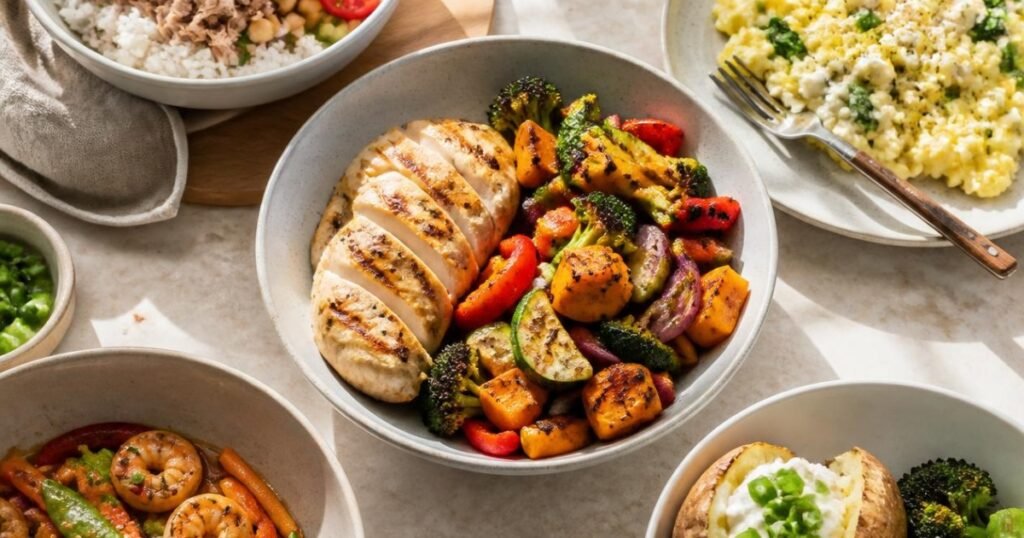
Easy low calorie meals don’t have to be bland, complicated, or leave you hungry an hour later. The biggest challenge for most people isn’t knowing they should eat healthier—it’s finding meals that fit into a busy day without spending an hour in the kitchen.
Whether you’re fitting in a home workout before work or making dinner after a long day, quick meals that are high in protein and satisfying make staying on track much easier. This guide brings together 30 easy low calorie meals that are ready in 30 minutes or less, along with practical meal ideas, post-workout options, budget-friendly favorites, and simple ingredient swaps that help cut calories without sacrificing flavor.
Quick Answer: What Makes a Meal Both Low-Calorie and Satisfying
A meal that’s actually easy to stick with — not just low in calories on paper — generally hits these marks:
- 25–40g of protein per meal
- High-fiber vegetables to add volume without many calories
- Moderate complex carbohydrates for energy and recovery
- Minimal added oil, since fats are calorie-dense even in small amounts
- 10–30 minutes of total prep and cook time
The goal isn’t to eat as little as possible. It’s to eat foods that keep you full on fewer calories, so the deficit feels sustainable instead of like a countdown to your next meal.
| Goal | Recommendation |
|---|---|
| Calories per meal | 300–500 kcal |
| Protein | 25–40g |
| Prep time | 10–30 minutes |
| Best for | Weight loss, home workouts, meal prep |
Why Some Easy Low-Calorie Meals Are More Filling Than Others
“Healthy” meal and felt hungry again before the dishes were done? It usually isn’t because you ate too many or too few calories—it’s because the meal wasn’t balanced. The most satisfying easy low calorie meals combine lean protein, fiber-rich vegetables, and moderate portions of complex carbs, helping you stay full longer and making it much easier to stick with your weight-loss goals.
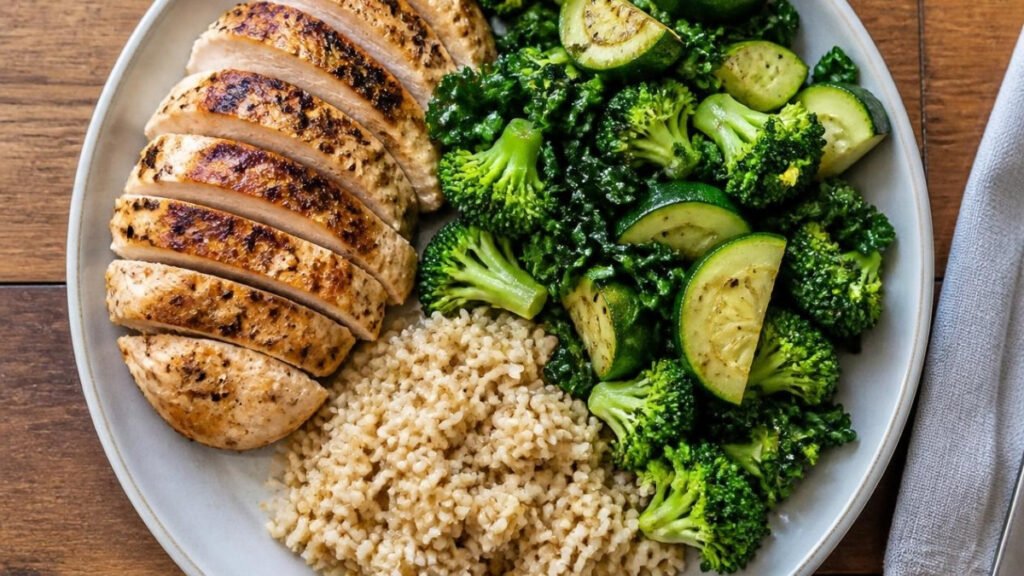
Why Protein Should Come First
Protein is the single biggest factor in whether a low-calorie meal keeps you full. It takes longer to digest than carbs or fat, which slows down how quickly your stomach empties, and it also has the highest “thermic effect” of any macronutrient — meaning your body burns more calories just processing it. If you’re doing home workouts, protein has a second job too: preserving the muscle you’re working to build while you’re in a calorie deficit.
A simple rule that works well for most beginners: aim for a palm-sized portion of lean protein at every meal before you fill in the rest of the plate.
The Secret Behind Volume Eating
Big bowl of vegetable soup can leave you feeling full, while a small bag of crackers barely gets you through the afternoon? That’s because the amount of food on your plate often matters just as much as the calorie count. Filling your meals with foods that are naturally high in water and fiber—like leafy greens, zucchini, cauliflower, broth-based soups, and berries—lets you enjoy a larger portion without adding a lot of extra calories. It’s a simple habit that makes eating fewer calories feel much less restrictive.
Why Hunger Isn’t Required for Fat Loss
Feeling hungry all the time is not a sign you’re doing it right. It’s usually a sign the meal composition is off. It’s surprisingly common for beginners to eat a plain salad for lunch, feel proud of the low calorie count, and then find themselves overeating at dinner or snacking heavily at night. A salad with grilled chicken, avocado, and a light dressing keeps you full; a salad that’s mostly lettuce with a splash of dressing usually doesn’t — even though the calorie difference between the two might be small.
High-Protein Meal vs. Low-Protein Meal (Same Calories)
| Factor | High-Protein Meal (~35g protein) | Low-Protein Meal (~8g protein) |
|---|---|---|
| Satiety | Lasts 3–4 hours | Often fades within 1–2 hours |
| Muscle preservation | Supports it during a deficit | Minimal support |
| Snacking risk | Lower | Higher, especially at night |
| Example | Grilled chicken, rice, broccoli | Buttered pasta with vegetables |
15-Minute Easy Low-Calorie Meals for Busy Weeknights
Busy evenings don’t leave much room for complicated recipes. When you’re trying to get dinner on the table after work, a workout, or running errands, simple meals usually win. These easy low calorie meals keep prep short, cleanup easy, and still give you plenty of protein and flavor. Most take around 15 minutes from start to finish, so they’re realistic for everyday life—not just weekends.
- One-Pan Chicken & Vegetables — Diced chicken breast, frozen mixed vegetables, and a light drizzle of oil, cooked in one skillet.
- Tuna Rice Bowl — Canned tuna, microwave rice, and a squeeze of lemon over greens.
- Egg & Cottage Cheese Scramble — Whisk eggs with a spoonful of cottage cheese for extra protein and creaminess without added fat.
- Shrimp Stir Fry — Shrimp cook in under 5 minutes; toss with frozen stir-fry vegetables and a light soy-based sauce.
- Turkey Lettuce Wraps — Ground turkey seasoned simply, wrapped in butter lettuce instead of tortillas.
- Greek Yogurt Chicken Bowl — Shredded rotisserie chicken mixed with plain Greek yogurt, herbs, and cucumber.
- Microwave Potato Protein Bowl — A microwaved potato topped with cottage cheese or Greek yogurt and everything-bagel seasoning.
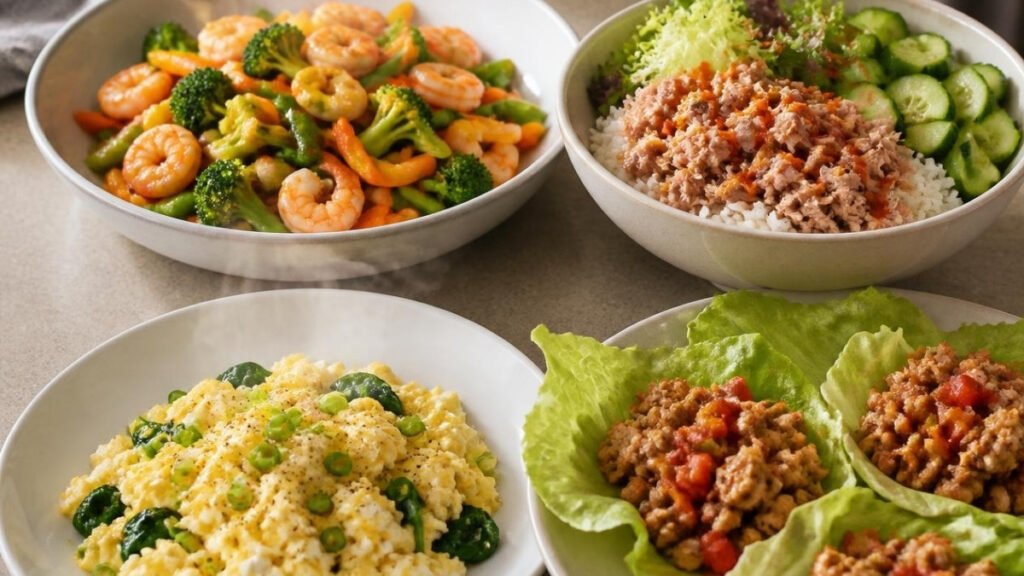
One practical tip that saves real time on busy nights: pre-cooked chicken and frozen vegetables cut a 30-minute meal down to under 10, without meaningfully changing the nutrition. Many home cooks avoid frozen vegetables out of habit, but they’re typically flash-frozen at peak ripeness and hold onto their nutrients just as well as fresh.
| Meal | Calories | Protein | Prep Time | Best For |
|---|---|---|---|---|
| One-Pan Chicken & Vegetables | ~380 | 35g | 15 min | Weeknight dinners |
| Tuna Rice Bowl | ~350 | 30g | 10 min | Quick lunches |
| Egg & Cottage Cheese Scramble | ~300 | 28g | 10 min | Breakfast |
| Shrimp Stir Fry | ~330 | 32g | 15 min | Fast dinners |
| Turkey Lettuce Wraps | ~320 | 30g | 15 min | Low-carb option |
| Greek Yogurt Chicken Bowl | ~340 | 34g | 10 min | Meal prep |
| Microwave Potato Protein Bowl | ~360 | 26g | 8 min | Post-workout |
High-Protein Low-Calorie Meals for Post-Workout Recovery
Finishing a workout often leaves you with the same question: What should I eat now? The answer doesn’t have to be complicated. A meal with plenty of protein and a moderate amount of carbs can help you recover, stay satisfied, and support your fitness goals without adding unnecessary calories. It also makes it less tempting to grab whatever snack is closest when you’re hungry after exercising.
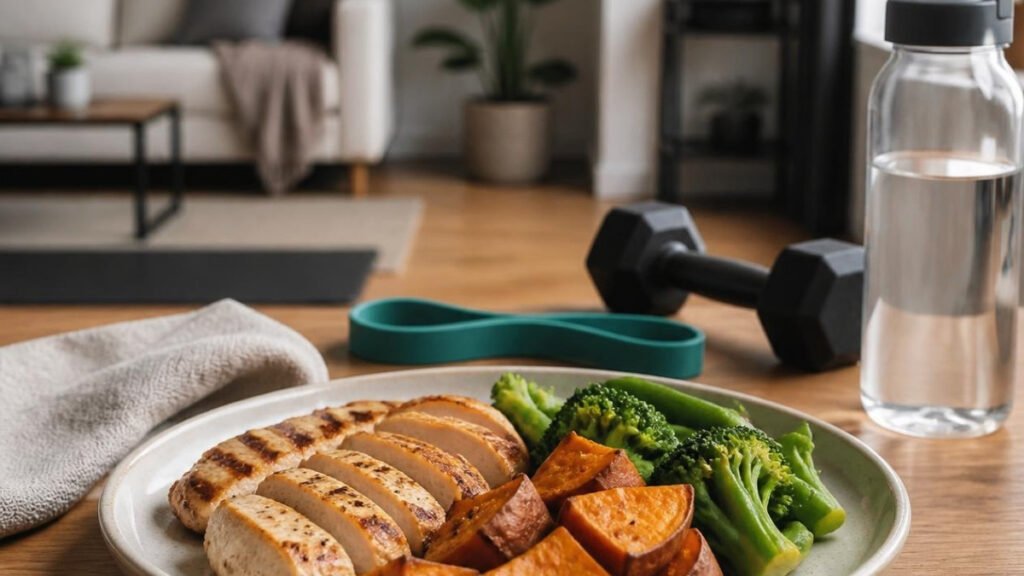
Best Meals After Strength Training
After resistance training, your muscles are primed to use protein for repair. A combination of protein and a moderate amount of carbohydrate — like grilled chicken with sweet potato, or a turkey and rice bowl — supports recovery without excess calories.
Best Meals After Cardio
Cardio sessions burn through glycogen (stored carbs) more than they break down muscle tissue, so a slightly higher-carb, moderate-protein meal — such as a tuna rice bowl or Greek yogurt with fruit and oats — tends to work well here.
Recovery Meals Under 500 Calories
A common point of confusion is whether carbs should be avoided after a workout to “protect” the calorie deficit. In practice, cutting carbs too aggressively after training often backfires — it can leave you fatigued and more likely to overeat later. A moderate portion of carbs alongside protein is usually the better choice for both recovery and long-term adherence.
Workout Type vs. Recommended Meal
| Workout Type | Recommended Meal | Why |
|---|---|---|
| Strength training | Chicken + sweet potato + greens | Supports muscle repair |
| HIIT / Cardio | Tuna rice bowl or yogurt + oats | Replenishes glycogen |
| Light home workout | Egg scramble + vegetables | Lower calorie need |
| Long/intense session | Turkey chili or salmon + rice | Higher protein and carb needs |
One-Pan, One-Pot & Sheet-Pan Low-Calorie Meals with Minimal Cleanup
When dinner only leaves you with one pan instead of a sink full of dishes, cooking at home feels a lot more realistic on busy nights. The recipes below keep prep simple, cleanup quick, and still deliver plenty of protein and flavor.
- One-Pan Chicken Dinner — Chicken thighs or breast with vegetables, roasted together.
- Sheet-Pan Salmon & Vegetables — Salmon and broccoli or asparagus on a single tray.
- High-Protein Turkey Chili — Ground turkey, beans, and tomatoes simmered in one pot.
- Easy Taco Skillet — Lean ground beef or turkey with taco seasoning, black beans, and corn in one pan.
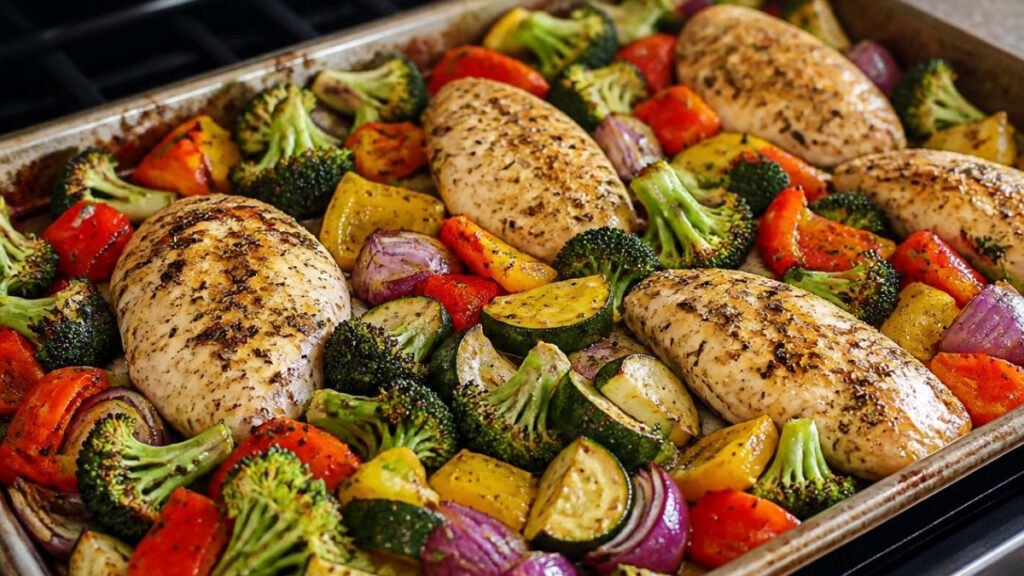
How to Build a One-Pan Meal (Checklist)
- [ ] Choose one lean protein (chicken, turkey, salmon, shrimp)
- [ ] Add 2–3 cups of vegetables (fresh or frozen)
- [ ] Use 1 teaspoon of oil or an oil spray, not a pour
- [ ] Season with herbs and spices instead of heavy sauces
- [ ] Cook everything together at the same temperature when possible
Many home cooks find that reducing the number of dishes they use is one of the most underrated ways to make healthy eating stick. It’s less about willpower and more about lowering the friction between “I should cook” and actually doing it.
Smart Low-Calorie Food Swaps That Save Hundreds of Calories
Eating fewer calories can be as simple as making a few small changes to meals you already cook. Choosing a leaner protein, using a lighter sauce, or cutting back on cheese won’t completely change the meal, but the calories can add up quickly. Those small adjustments are often easier to stick with because they don’t make everyday meals feel unfamiliar.
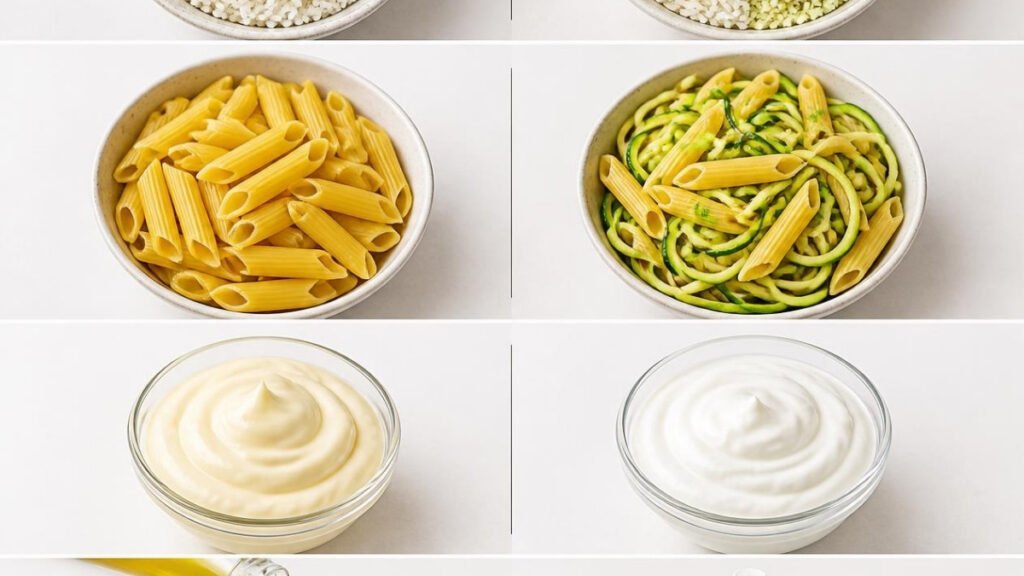
Rice Swaps
Mixing cauliflower rice half-and-half with regular rice cuts calories and adds fiber, without the “diet food” texture that turns people off from going 100% cauliflower rice.
Pasta Swaps
The same half-and-half approach works with zucchini noodles (zoodles) and regular pasta — you get the volume and texture of a full pasta bowl at a fraction of the calories.
Sauce Swaps
Plain Greek yogurt can replace mayonnaise in chicken or tuna salad with very little difference in taste, and cottage cheese blended smooth works well in place of heavy cream in sauces.
Cooking Oil Swaps
Switching from pouring oil to using an oil spray is one of the easiest changes to make — a tablespoon of poured oil is roughly 120 calories, while a light spray is closer to 10.
Traditional Ingredient vs. Lower-Calorie Swap
| Traditional | Swap | Calories Saved (approx.) |
|---|---|---|
| White rice (1 cup) | Half rice, half cauliflower rice | ~100 kcal |
| Regular pasta | Half pasta, half zucchini noodles | ~150 kcal |
| Mayonnaise (2 tbsp) | Plain Greek yogurt | ~140 kcal |
| Heavy cream sauce | Blended cottage cheese | ~200 kcal |
| Poured cooking oil | Oil spray | ~100 kcal |
Don’t try to swap everything at once. Replacing one or two ingredients per week is far more sustainable than overhauling every recipe overnight, and it gives you time to figure out which swaps you actually enjoy versus which ones feel like a downgrade.
Budget-Friendly Easy Low-Calorie Meals That Keep You Full
One of the most common misconceptions about eating for fat loss is that it requires expensive specialty products — protein bars, diet shakes, “keto” snacks. In reality, some of the most effective low-calorie, high-protein foods are also the cheapest items in the grocery store.
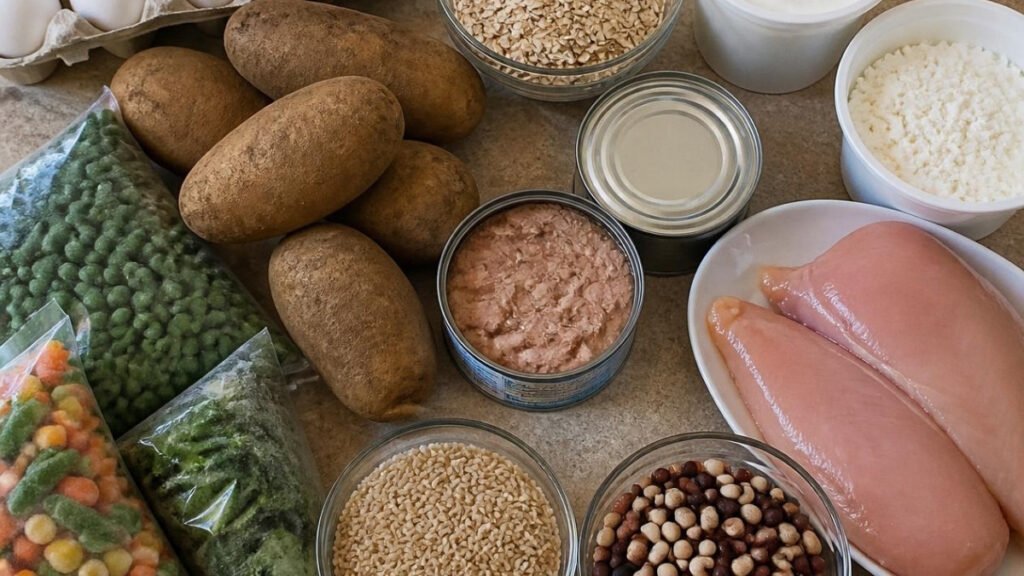
Grocery Staples Under Budget
Eggs, canned tuna, chicken breast, frozen vegetables, oats, potatoes, and dried or canned beans form the backbone of an affordable, high-protein diet. None of these require special shopping trips or diet-brand markups.
Cheap High-Protein Ingredients
Cottage cheese, Greek yogurt, and canned beans are consistently among the least expensive sources of protein per gram, and all three work in multiple meals across the week — reducing both cost and food waste.
Batch Cooking Tips
Cooking a large batch of chicken, rice, and roasted vegetables once or twice a week means most meals only take a few minutes to assemble. It’s common for people who commit to a couple of hours of batch cooking on a Sunday to spend noticeably less on takeout during the week — not because takeout was ever the plan, but because it stops being the only convenient option.
Cost Per Serving Comparison
| Ingredient | Approx. Cost per Serving | Protein per Serving |
|---|---|---|
| Chicken breast | $1.20 | 26g |
| Canned tuna | $0.90 | 24g |
| Eggs (2) | $0.50 | 12g |
| Cottage cheese (1/2 cup) | $0.70 | 12g |
| Canned beans (1/2 cup) | $0.40 | 7g |
| Protein bar (for comparison) | $2.00+ | 15–20g |
Volume Eating Tricks That Help You Stay Full Without Extra Calories
If there’s one strategy that makes the biggest difference in whether a calorie deficit feels manageable, it’s volume eating — structuring meals so you’re eating a genuinely large amount of food without a large amount of calories.
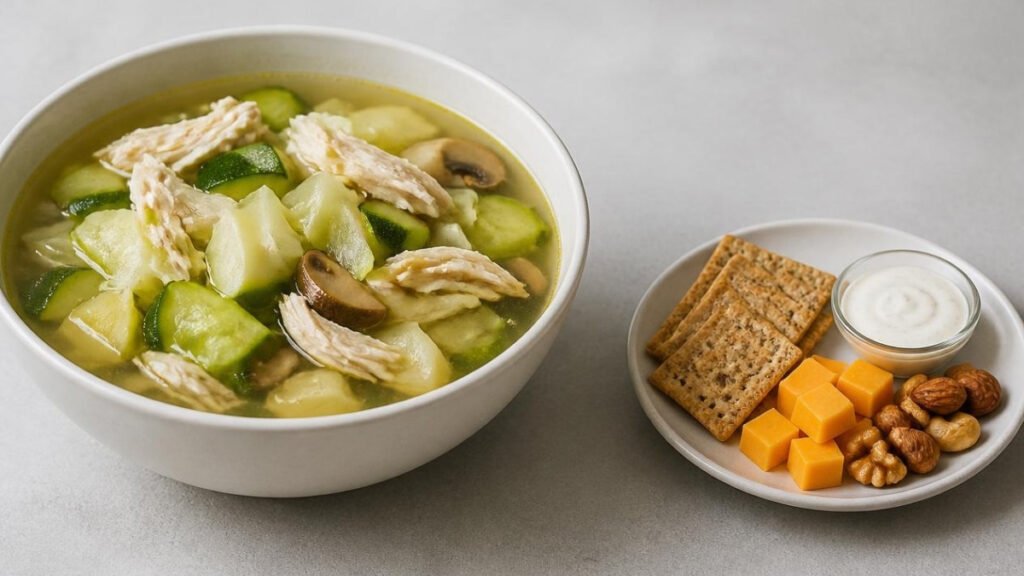
Best High-Volume Ingredients
Leafy greens, cucumbers, zucchini, mushrooms, cauliflower, and berries are all mostly water and fiber, which means you can eat generous portions for relatively few calories.
Warm Meals That Feel More Filling
Warm, broth-based meals tend to feel more satisfying than cold ones with a similar calorie count — likely because they take longer to eat and register more strongly with the body’s fullness signals. It’s common for people to underestimate how much a warm soup or stew helps with evening cravings compared to a cold salad, especially during colder months.
Easy Volume Eating Habits
Daily Volume Eating Checklist
- [ ] Start at least one meal with a broth-based soup or a large vegetable side
- [ ] Fill half your plate with vegetables before adding protein and carbs
- [ ] Choose whole fruit over fruit juice for the fiber and chewing time
- [ ] Bulk up rice or pasta dishes with extra vegetables
- [ ] Add a side salad to heavier meals instead of skipping vegetables
Common Low-Calorie Meal Mistakes That Slow Progress
Even with good intentions, a few recurring mistakes quietly add calories back into meals that look healthy on the surface. Catching these early can save weeks of frustration.
Hidden Calories
Cooking oil, salad dressings, sauces, and “healthy” add-ons like nuts or cheese are some of the easiest ways for a low-calorie meal to quietly become a 700-calorie one. It’s surprisingly common for people to track their protein and vegetables carefully while completely overlooking the tablespoons of oil or dressing added during cooking.
Protein Mistakes
Too little protein is the single most common issue with low-calorie meals that don’t keep people full. If a meal leaves you hungry within an hour, checking the protein content is usually the first place to look.
Meal Prep Problems
Skipping meal planning tends to lead to last-minute, less healthy choices — not because people lack willpower, but because decision fatigue by dinnertime is real. Having even two or three go-to meals ready to go removes that daily decision entirely.
Low-Calorie Meal Audit (Checklist)
- [ ] Does this meal have at least 25g of protein?
- [ ] Am I measuring oil instead of pouring it freely?
- [ ] Are sauces and dressings accounted for?
- [ ] Am I eating enough volume to feel satisfied?
- [ ] Do I have a plan for tomorrow’s meals?
Hidden Calorie Sources
| Source | Typical Hidden Calories |
|---|---|
| Poured cooking oil (1 tbsp) | ~120 kcal |
| Creamy salad dressing (2 tbsp) | ~150 kcal |
| Handful of nuts | ~170 kcal |
| Shredded cheese (1/4 cup) | ~110 kcal |
| Flavored coffee creamer | ~50–80 kcal |
Frequently Asked Questions
What are the easiest and fastest low-calorie dinners I can make on busy nights? One-pan chicken and vegetables, shrimp stir fry, and turkey lettuce wraps are all ready in 15 minutes or less. Keeping pre-cooked protein and frozen vegetables on hand makes any of these achievable even on your busiest evenings.
How can I stay completely full on a low-calorie diet without overspending on groceries? Focus on affordable, high-protein staples like eggs, canned tuna, chicken breast, cottage cheese, and beans, paired with high-volume vegetables. These combine satiety and cost-efficiency better than most packaged diet products.
Are plain potatoes good for weight loss, and how should I prepare them quickly? Yes — potatoes are filling, low in calories relative to their volume, and easy to prepare. Microwaving a potato takes about 8 minutes, and topping it with cottage cheese or Greek yogurt adds protein without much extra fat.
What are some warm, comforting low-calorie meal options for cold days or evening cravings? Broth-based soups, turkey chili, and vegetable-loaded stews tend to feel more satisfying than cold meals with similar calorie counts, making them especially useful for managing evening cravings.
How can I use cottage cheese and Greek yogurt to increase protein in quick low-calorie meals? Both work well stirred into scrambled eggs, blended into sauces, used as a mayonnaise substitute, or eaten as a base for a protein bowl topped with fruit, vegetables, or seasoning.
What are the best 5-ingredient high-protein meals for easy volume eating? Simple combinations like chicken, rice, and frozen vegetables, or tuna, greens, and beans, deliver high protein and generous volume without requiring long ingredient lists or complicated techniques.
Is savory oatmeal actually good for weight loss, and how do you make it? Yes — oats cooked in broth with an egg and vegetables offer fiber and protein in one filling bowl. It’s a useful alternative for people who find sweet oatmeal doesn’t keep them full through the morning.
How can I make low-calorie versions of classic pasta and taco bowls at home? Mix zucchini noodles with regular pasta, use lean ground turkey instead of beef, swap sour cream for Greek yogurt, and load both dishes with extra vegetables to increase volume while lowering overall calories.
🏠 Behind This Guide
Losing fat doesn’t usually fail because people don’t know what to eat—it fails because healthy meals often feel too complicated, take too long, or leave you hungry an hour later.
That’s why this guide focuses on meals that fit real life: quick to make, filling enough to keep you satisfied, and simple enough to cook again on a busy weeknight. Along the way, you’ll also find practical tips for building balanced meals, making smarter ingredient swaps, and getting enough protein after home workouts.
Because eating well isn’t about finding the “perfect” recipe.
It’s about finding meals you’ll actually look forward to making again.
Continue Your Home Fitness Journey
Eating well is just one part of reaching your fitness goals. If you’re looking to lose fat, build strength, or create healthier habits at home, these beginner-friendly guides are a great place to continue.
- Calorie Deficit Explained — Learn how a calorie deficit works and how to create one without feeling constantly hungry.
- Workout at Home to Lose Weight — A simple home workout plan using bodyweight and light equipment to help burn calories and build strength.
- Why Am I Not Losing Weight? — Common reasons progress slows down, plus practical tips to get back on track.
- How to Lose Fat Without Losing Muscle — Discover how protein, strength training, and recovery work together to protect lean muscle during weight loss.
- Meal Prep for Weight Loss — Save time during the week with easy meal prep ideas that make healthy eating more consistent.
❤️ A Final Note
Every fitness journey starts with one small step—and lasting results come from the habits you build along the way.
At SportZillaX, we’re passionate about making home fitness simple, practical, and accessible for everyone. From no-equipment workouts and beginner-friendly strength training to realistic weight-loss tips and healthier daily habits, every guide is created to help you make steady progress with confidence.
Our mission is simple: helping you build a stronger body, healthier habits, and a more active life—one step at a time.