
Let’s face it: the traditional gym model is broken. Between the 20-minute commute, the “gym-bro” squat rack squatters, and that lingering scent of a thousand unwashed towels, the friction to actually work out is at an all-time high. In 2026, building a home gym isn’t just a luxury; it’s a strategic investment in your time, your health, and even your property value.
Whether you have a sprawling three-car garage or a tiny corner in a city apartment, creating a high-performance training space is entirely possible. But before you start clicking “Add to Cart” on every shiny barbell you see, you need a blueprint. A great home gym isn’t just about the iron; it’s about the flow, the friction-less start, and selecting the right home gym station that fits your life.
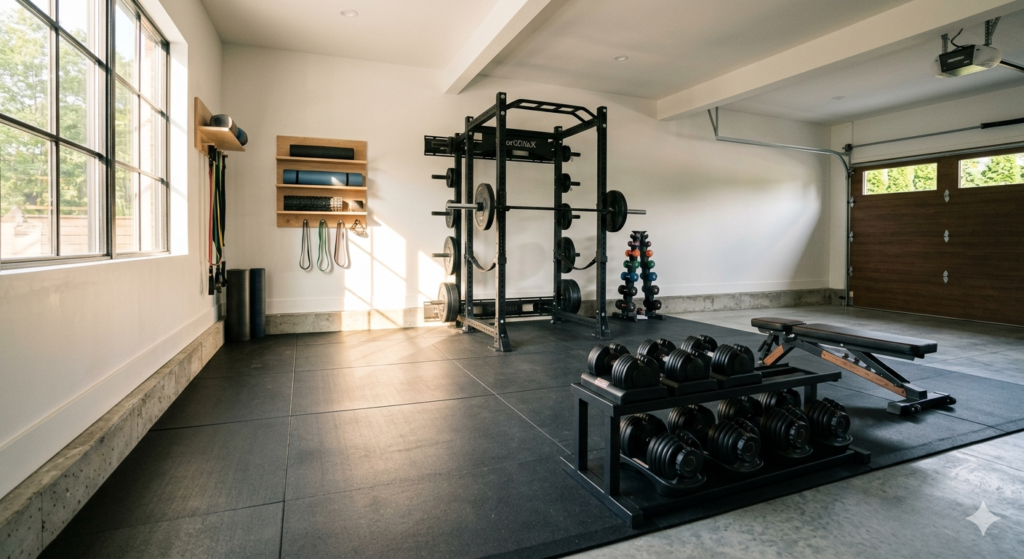
Strategic Planning: Where Does Your Home Gym Belong?
Before buying gear, you must audit your space. A home gym takes a physical toll on a house that most beginners underestimate.
The Foundation: Flooring and Structural Load
A standard residential floor is typically rated for 40-50 lbs per square foot. If you plan on deadlifting 400 lbs, you are creating a “point load” that can damage subflooring.
- The 3-Layer Rule: We recommend a base of original concrete, topped with 3/4-inch vulcanized rubber stall mats. This doesn’t just protect the floor; it drops the impact noise from 110 decibels (rock concert level) to a neighbor-friendly 70 decibels.
The Environment: Lighting and Airflow
A dark, stuffy basement is where motivation goes to die. Invest in high-output LED shop lights (5000K daylight spectrum) and a high-velocity floor fan. If the space feels professional, you will train professionally.
Choosing Your Foundation: Modular Setup vs. A Home Gym Station
This is the biggest fork in the road for any home gym owner. Your training style dictates the winner.
The Home Gym Station (The Efficiency King)
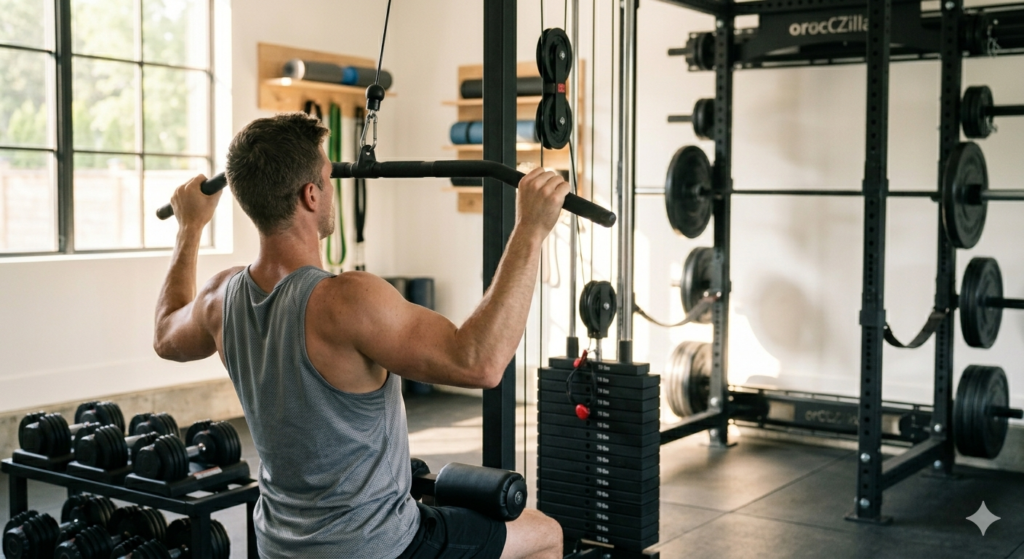
If you are looking for maximum variety in a minimum footprint, a multi-functional home gym station is your best bet.
- The Space Save: A hybrid cable/Smith machine typically occupies only 25-30 square feet but replaces nearly 10 separate commercial machines.
- Safety First: Data shows that cable-based stations reduce “pinned” injuries (being stuck under a heavy bar) by 85%. For solo home trainers, this peace of mind is priceless.
The Modular Power Rack (The Scalable Legend)
For those who live for the “Big Three”—Squat, Bench, and Deadlift—the power rack is the gold standard. It is infinitely scalable. You can start with a basic rack and barbell, then slowly add pull-down attachments or jammer arms as your budget and strength grow.
Budgeting for Performance: The ROI of Fitness
Is a home gym actually cheaper? Let’s crunch the numbers. The average high-end commercial membership, including commute gas and “convenience” snacks, costs the modern American roughly $1,800 per year.
| Setup Tier | Key Components | Ideal For | Estimated Budget |
| The Minimalist | Adjustable Dumbbells, Foldable Bench | Small Apartments | $600 – $1,200 |
| The Versatile | Home Gym Station, Kettlebells | Strength & Toning | $2,000 – $3,500 |
| The Professional | Power Rack, 500lb Plates, Flooring | Powerlifting / CrossFit | $5,000+ |
The Break-Even Point: A mid-tier home gym pays for itself in just 16 months. After that, your fitness is “free” for the rest of your life. Plus, a dedicated “Wellness Room” can increase your home’s resale value by up to 3-5%.
Protecting Your Investment: Maintenance and Hygiene
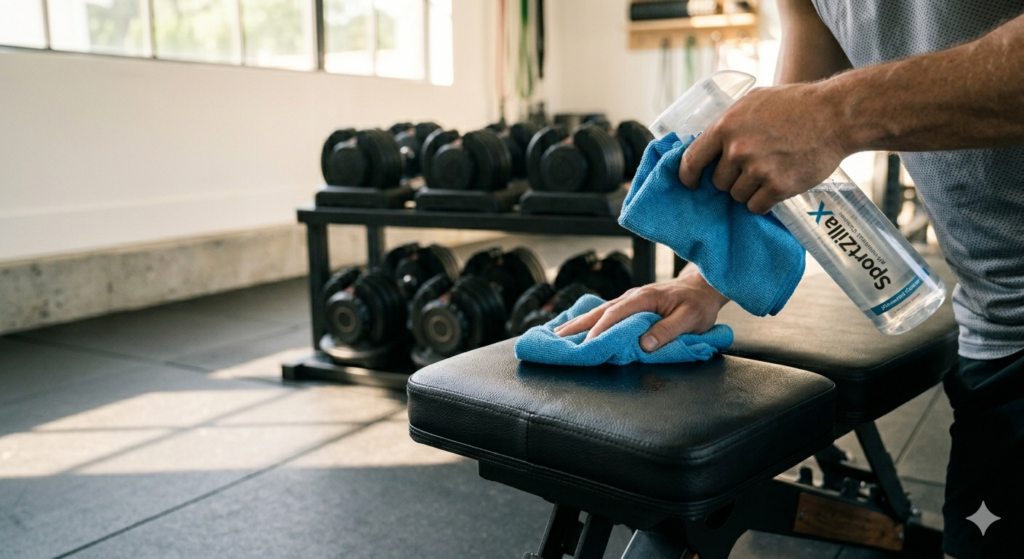
Dust and sweat are the silent killers of cable pulleys and upholstery. If you don’t maintain your gear, the friction in your home gym station will increase, making a 50 lb lift feel “jerky” and inconsistent.
- The Wipe-Down Ritual: Use a pH-neutral cleaner after every session. As we emphasized in our Yoga Mat Cleaner Guide, avoiding harsh bleaches is crucial to prevent rubber mats from cracking and becoming brittle.
- Cable Lubrication: Apply a dry silicone spray to your pulley rods every 3 months. This ensures that “buttery smooth” commercial feel.
- The 300-Hour Check: Every few months, inspect your bolts and cable tension. (Just like we did in our Massage Gun 300-Hour Test, consistency in maintenance leads to longevity in performance.)
Home Gym FAQ: Your Pre-Purchase Checklist
Q: How do I handle the summer heat in a garage? A: Insulation is your best friend. Adding a DIY radiant barrier to your garage door can drop the temperature by 12-15°F. Combine this with a powerful floor fan for optimal evaporative cooling.
Q: Can I build a home gym in a carpeted room? A: Yes, but you must use a rigid “sub-floor” like 1/2-inch plywood over the carpet before laying your rubber mats. Lifting on squishy carpet causes instability and can lead to ankle injuries.
Q: What is the most “bang-for-your-buck” accessory? A: A set of Resistance Bands. They cost under $50, take up zero space, and can be used to add “accommodating resistance” to almost any lift on your home gym station.
Conclusion: Your Fitness Sanctuary Awaits
Building a home gym is an act of self-reliance. It removes the excuses, saves the most valuable resource you have—time—and creates an environment where you are the only person you have to compete with.
Don’t feel pressured to buy the elite setup on Day 1. Start with a solid floor, one good home gym station or a set of dumbbells, and grow from there. The best time to start was yesterday; the second-best time is today.
Welcome to the SportZillaX family. Now, let’s get to work!