
If you’re staring at a “low Readiness score” on your wrist while your quads still feel like lead, you’re experiencing the 2026 Data Gap. You spent $500 on a high-end smartwatch to optimize your performance, yet you feel more fatigued than ever. The hard truth? Smartwatches are great at diagnosing the problem, but they are physically incapable of fixing it. To move the needle on your performance, you need to bridge the gap between smart fitness gear and recovery equipment. Tracking your Heart Rate Variability (HRV) is useless unless you have the tools to actually change it.
The Data-Rich, Recovery-Poor Paradox
Most athletes in 2026 are drowning in biometrics. We know our REM cycles, our VO2 Max, and our skin temperature. However, having a “Red” recovery day on your app doesn’t magically heal muscle fibers. This is where most users fail: they treat their wearable as a coach when it’s actually just a witness.
To stop the cycle of overtraining, you must transition from monitoring to mechanical intervention. If your data says you’re stressed, your central nervous system needs more than a “rest day”—it needs targeted percussion therapy and active compression.
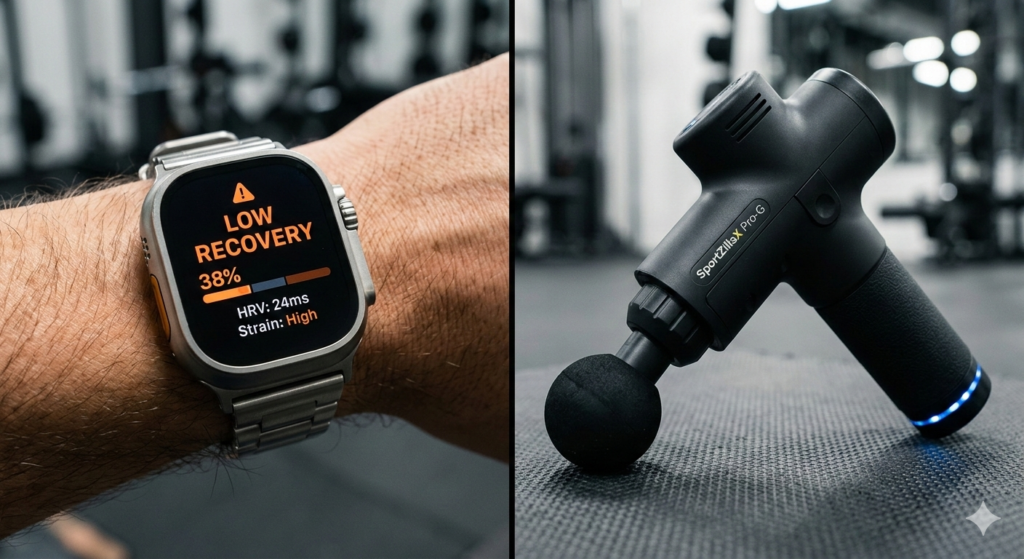
Translating Biometrics into Physical Action
The secret to elite-level progress is knowing which recovery equipment to grab based on specific wearable metrics. Don’t just guess; use this protocol to sync your tech.
1. HRV (Heart Rate Variability) & Percussion Tech
When your HRV drops, your sympathetic nervous system (fight or flight) is dominant. Research from the National Academy of Sports Medicine (NASM) suggests that myofascial release can help shift the body back into a parasympathetic state. Using a high-torque massage gun on your glutes and traps for just 10 minutes can “trick” your nervous system into relaxing, directly improving your HRV for the next morning.
2. Muscle Strain & Pneumatic Compression
If your “Strain Score” is through the roof but you have a session tomorrow, static stretching won’t cut it. Professional-grade compression boots use sequential pulse technology to mimic the body’s natural muscle pump, flushing metabolic waste far faster than manual massage.
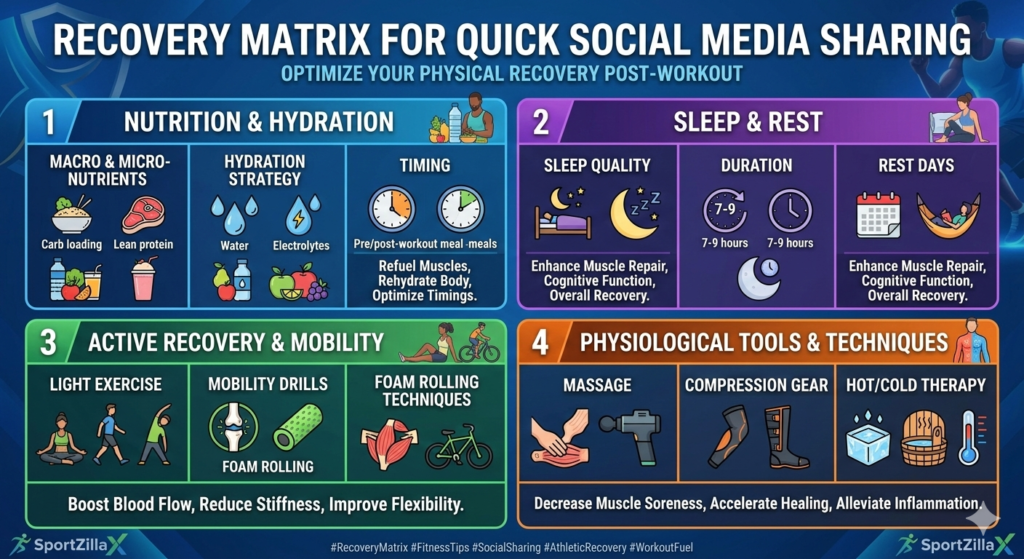
The 2026 Recovery Matrix: Data vs. Gear
Stop guessing. Use this table to decide which gear to deploy based on your morning data:
| Wearable Metric (Signal) | Biological Status | Recommended Gear (Solution) |
| Low HRV / High Stress | Nervous System Fatigue | Percussion Massager (Low Intensity) |
| Poor Sleep Score | Low Growth Hormone | Red Light Therapy / Weighted Blanket |
| High Muscle Strain | Tissue Micro-trauma | Pneumatic Compression Boots |
| Elevated RHR | Systemic Inflammation | Cold Plunge / Cryo-Tools |
Why “Pro-Grade” Gear Matters for Long-Term Gains
In the world of smart fitness gear, the market is flooded with $30 “mini-massagers” that stall the moment you apply pressure. If you are serious about your 2026 goals, you need to look for Stall Force and Amplitude.
A tool with less than 12mm of amplitude isn’t reaching the deep tissue; it’s just vibrating your skin. For athletes lifting heavy or running high mileage, choosing gear with industrial-grade brushless motors is the difference between “feeling good” and actually recovering.
Essential Recovery Gear Checklist:
- High-Amplitude Massage Gun: Minimum 14mm for deep muscle penetration.
- Smart Foam Roller: Vibrating rollers that sync via Bluetooth to your warm-up routine.
- Graduated Compression Sleeves: For everyday wear to manage “hidden” leg fatigue.
FAQ: Making Your Smart Gear Work for You
Q: Can I sync my recovery gear directly with my Apple Watch? A: Not directly yet, but the best strategy is to log your recovery sessions in your fitness app. You’ll notice that on days you use compression tech, your “Recovery Score” the following morning is statistically higher.
Q: Is it possible to “over-recover”? A: Yes. If you use high-intensity percussion therapy on an acute injury (like a tear), you can make it worse. Always use the “low and slow” method for the first 48 hours of soreness.
The Bottom Line
Your smartwatch is an incredible GPS, but it’s not the engine. If you want to see real-world results in 2026, stop obsessing over the charts and start investing in the recovery equipment that actually moves those numbers. Data without action is just noise.
Ready to upgrade your recovery game? Check out our latest [Smart Gear Usage Guides] to see which percussion tools our trainers personally use to maintain a 90+ recovery score.