The Goldilocks Dilemma: Why Your Dumbbell Choice Dictates Your Results
We’ve all been there—standing in the middle of a gym floor or scrolling through SportzillaX, staring at a wall of dumbbells like they’re some kind of cryptic math equation. You don’t want to grab the 10-pounders and feel like you’re waving around air, but you also don’t want to struggle with the 30s and end up at the chiropractor by Tuesday.
The “Goldilocks” weight is that sweet spot where you’re actually shaking by the last few reps. In my experience, if you aren’t making a slightly ugly face during rep 10, you’re probably going too light. If you want to see a real change in your physique, you need mechanical tension. That means the weight has to be heavy enough to give your muscles a reason to grow, not just a reason to move.
Determining Your Starting Point: The Baseline Test
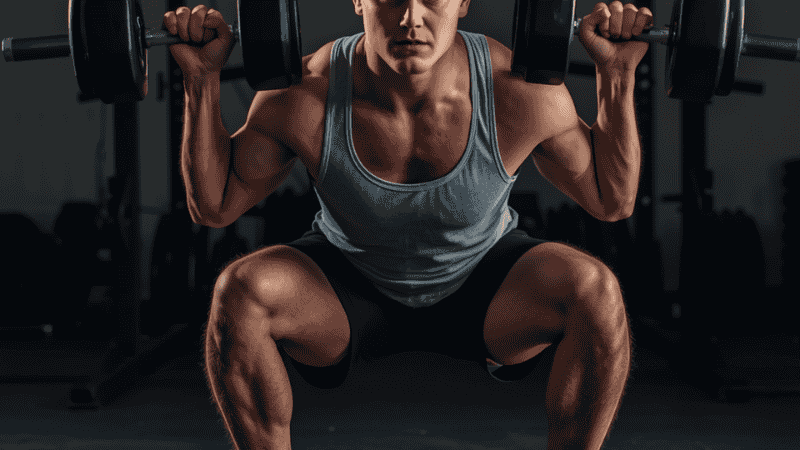
Buying dumbbells online is tricky because you can’t feel the grip or the balance. But you can use the Rep Max Rule. Forget “lifting until it hurts”—that’s a recipe for burnout. Instead, find a weight where you can hit 8–12 reps with solid form, but those last two feel like a genuine fight. If your form turns into a weird body-swing just to get the weight up, put it down. You’re done.
Suggested Starting Ranges
I’ve coached enough people to know these are the “safe” zones for a solid home workout.
| Movement Category | Men (Getting Started) | Women (Getting Started) |
| Isolation (Curls, Triceps) | 15lb – 25lb | 8lb – 15lb |
| Compound (Presses, Rows) | 30lb – 50lb | 15lb – 30lb |
| Lower Body (Squats, Lunges) | 40lb – 70lb | 25lb – 45lb |
Real-Life Example 1: The “One-Pair” Mistake
My buddy Mike started his home gym with a single pair of 25lb hex dumbbells. For the first week, he felt like a hero doing overhead presses. By week three, his 45-minute workout was a slog because 25lbs was way too heavy for lateral raises (his shoulders were screaming) but way too light for his lunges. He ended up doing 50 reps of lunges just to feel a burn, which wasted a ton of time. The Lesson: You need a range, not a single pair.
Equipment Breakdown: Fixed vs. Adjustable
When you’re building a space to sweat, you have to choose a side.
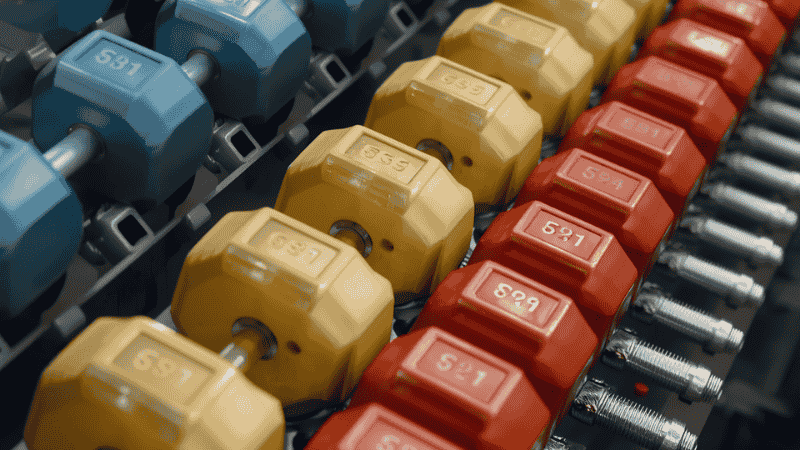
- The Case for Fixed Hex Dumbbells: These are the “old reliable.” I love these for high-intensity circuits. When your heart rate is 160 BPM and you’re dripping sweat, you don’t want to fiddle with dials. You just want to drop the 40s and grab the 20s. Plus, they don’t roll away when you’re doing floor work.
- The Case for Adjustable Dumbbells: If you’re working out in a spare bedroom or a corner of the living room, these are a lifesaver. Having a full rack’s worth of weight in two blocks is the only way to do a real home gym routine without turning your house into a cluttered warehouse.
Best Dumbbells for Your Home Gym (Top Picks)
Best Overall: Rubber Hex Dumbbell Sets
These are the workhorses of the industry. The rubber coating prevents floor damage and keeps the noise down when you reach muscle failure and have to set them down quickly.
- Why it fits: It’s for the person who wants gear that feels like a real gym. No clicking, no rattling, just solid weight.
Best for Beginners: Neoprene Coated Dumbbells
When I started, steel handles felt cold and slippery once my hands got sweaty. Neoprene stays grippy even when you’re dripping.
- Why it fits: If your routine involves a lot of “follow-along” YouTube workouts or HIIT, these are comfortable and won’t ding your baseboards.
Best for Small Spaces: Adjustable Dumbbell Systems
The ultimate MVP of home gear. You can do a heavy chest press and then immediately dial it down for lateral raises.
- Why it fits: Perfect for apartment dwellers. Slide them under the bed when you’re done, and your living room is a living room again.
Comparison: Which Setup Wins for You?
| Feature | Fixed Hex Sets | Adjustable Systems | Neoprene Sets |
| Price | Moderate (scales with weight) | High Upfront | Low/Budget |
| Space | Requires Rack | Minimal (2 sq ft) | Minimal (small rack) |
| Versatility | High (fast swaps) | Extreme (wide ranges) | Low (limited weight) |
| Durability | Indestructible | Delicate internal parts | High |
What Most Fitness Guides Get Wrong
Most “expert” blogs tell you to start with 5lbs and stay there. This is how you hit a plateau in three weeks. They also treat everyone as a monolith.
The reality? You need to be progressive. If you’re not tracking your lifts in a notebook or app, you’re just exercising, not training. Most guides also ignore grip strength—often, your hands will give out before your legs do. That’s why we recommend recovery tools like massage guns to keep your forearms from seizing up between sessions.
The 3 Critical Mistakes I See Every Week
1. Rushing the Downward Movement
The “eccentric” phase—lowering the weight—is where the magic happens. I see guys at the gym drop their dumbbells like they’re hot coals. Fight the weight on the way down for a 2-second count. Your soreness the next day will prove it works.
2. Being Scared of “Heavy”
The “Pink Dumbbell” myth is still alive, and it’s killing progress. Women often ask me if lifting 25lbs will make them look like a bodybuilder. Trust me, it won’t. It just makes the 45-minute workout actually effective.
3. Staying Stuck in a Rut
Your body is lazy. If you’ve been curling the 15s for three months, you’re just going through the motions. Every few weeks, try to add 5lbs. That’s progressive overload.
Real-Life Example 2: Sarah’s Plateau
Sarah came to me because she was doing 30-minute dumbbell workouts five days a week but seeing zero change. She was using 8lb weights for everything. I pushed her to use 20lb weights for her squats. She was terrified she’d be too sore to walk, and yeah, she was a little stiff for two days—but she finally broke through her weight-loss plateau because her body finally had a reason to burn more fuel.
FAQ: The No-BS Answers
1. Can I actually lose weight just with dumbbells? Yes. Building muscle turns your body into a 24/7 calorie-burning furnace. A set of heavy goblet squats will leave you more winded than a mile run anyway.
2. Metal vs. Rubber? Go rubber. Metal is loud, it clanks, and if you have a humid garage, it’ll eventually rust. Rubber-coated hex bells are the gold standard for a reason.
3. How do I know if I’m overdoing it? If your joints hurt (knees, elbows, wrists) instead of your muscles, you’re either lifting too heavy or your form is trash. Efficiency beats ego every time.
4. Should I buy a rack? If you have more than three pairs of fixed dumbbells, yes. Trip hazards are real, and nothing ruins a workout like stubbing your toe on a 50lb iron bell.