
If you’ve ever stepped under a heavy barbell and felt like your spine was being compressed into a harmonica, you’re not alone. For most of us starting out, the traditional back squat is a total nightmare of “butt winks,” clicking knees, and that terrifying lower back strain that lingers for three days. You want powerful legs and that high-intensity calorie burn, but the technical barrier of the barbell keeps you stuck on the leg extension machine.
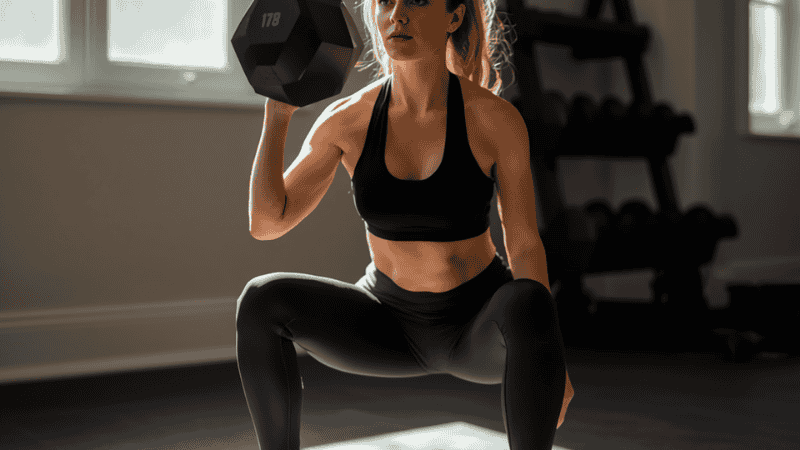
Enter the dumbbell squat—specifically, the goblet squat. By holding the weight in front of your chest like a shield, you create a natural counterweight that basically forces your torso to stay upright. It’s the ultimate “cheat code” for perfect form, allowing you to actually sit deep into your hips without the constant fear of tipping over backward.
Best Gear for Your Dumbbell Squats: Top Picks
Best Overall: Heavy Rubber Hex Dumbbells
If you’re going to buy one piece of heavy gear for leg day, make it a 45lb or 50lb hex.
- Why it fits: It’s indestructible. I’ve used mine for squats, swings, and rows for years. For a dumbbell squat, the stability of a solid iron head is unmatched compared to clunky adjustable plates.
Best for Beginners: Neoprene Coated Weights
Starting out with a 15lb or 20lb neoprene bell is much easier on the skin and the floor.
- Why it fits: When you’re dripping sweat on rep 20, that “soft” coating is way easier to hold onto than cold, slick steel, and it won’t bruise your chest.
Best for Small Space: Selectorized Adjustable Dumbbells
If you’re training in a studio apartment, you can’t have a pile of iron lying around.
- Why it fits: You can do 20lb “pulse” squats to warm up the joints, then click it over to 60lb for your heavy worksets without moving an inch. Check out our Best Adjustable Dumbbells review for the full breakdown.
Step-by-Step Technique: The “Elbows-In” Method
To get the most out of a dumbbell squat, you have to stop fighting the weight and start using it for balance.
- The Set-Up: Don’t just grab the handle. Cup the top head of a single dumbbell with both palms, holding it vertically right against your sternum. If it’s not touching your chest, your biceps will give out long before your legs do.
- The Descent: Take a stance slightly wider than your shoulders. As you sit back, tuck your elbows inside your knees. Your elbows should actually track toward the inside of your thighs—think of them as “depth gauges.” If they hit your knees, you’ve hit the sweet spot.
- The Ascent: Drive through your heels like you’re trying to push the floor away. If you find your heels lifting off the ground at the bottom, your weight is too far forward.
Real-Life Example 1: The “Desk Worker” Mobility Fix Take my buddy James. He spends 10 hours a day in a rolling chair. When he tried barbell squats, his tight hip flexors made his chest cave forward instantly. We switched him to a 30lb dumbbell squat, and the forward weight placement naturally “pulled” his spine into alignment. Within three weeks of hitting 4 sets of 12 reps, his range of motion doubled.
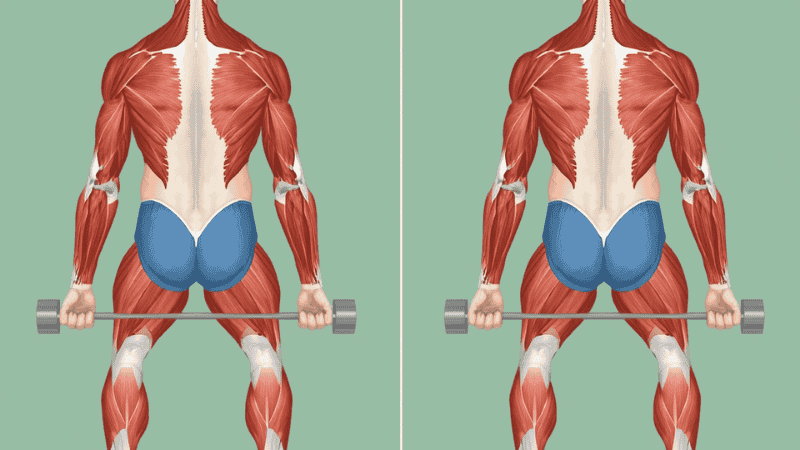
Gear Comparison for Leg Training
| Equipment Type | Price | Space | Versatility | Durability |
| Rubber Hex | $$ | Low | High | Indestructible |
| Adjustable | $$$ | Very Low | Extreme | Medium |
| Neoprene | $ | Low | Medium | High |
| Kettlebell | $$ | Low | High |
What Most Fitness Guides Get Wrong
Most generic “how-to” guides forget to tell you about the Grip Bottleneck. They suggest doing 20 reps, but if you’re holding a 50lb weight, your arms will quit at rep 12 while your legs are still fresh.
Another lie? That you need a squat rack to build “real” legs. High-volume dumbbell squats with a slow 3-second descent will build more muscle for a beginner than a half-hearted, shaky barbell squat ever will. Also, don’t ignore recovery gear like massage guns for your quads; the soreness from deep goblet squats is on another level.
3 Mistakes That Are Killing Your Progress
1. The “Chest Cave”
If that weight starts pulling your shoulders forward, your lats are “off.” Squeeze your shoulder blades like you’re trying to crush a grape between them.
2. The “Knee Knock” (Valgus)
If your knees cave in as you stand up, your glutes are lazy. Pro Tip: Imagine you’re standing on a piece of paper and trying to “rip it in half” by pushing your feet outward.
3. The Bicep Burn
I see people “holding” the weight with their arm muscles. Stop that. Let the dumbbell head rest on the heels of your palms. Use your skeleton to support the weight.
Real-Life Example 2: Sarah’s “Grip” Breakthrough
Sarah couldn’t get past 20lbs because her wrists were killing her. She was literally strangling the handle. I showed her the “cradle” grip—letting the weight sit in her palms—and she immediately jumped to a 45lb dumbbell squat.
FAQ: The No-BS Section
1. Is a 20lb dumbbell enough for squats? Maybe for the first week. But your legs are huge muscles; they’ll adapt fast. If you aren’t struggling to finish your 10th rep, you need to check our guide on how heavy your dumbbells should be and move up.
2. How do I stop the wrist pain? Stop gripping the handle like a suitcase. Use the “Goblet” grip where the weight sits in your palms. If that doesn’t work, grab some wrist wraps.
3. Can I skip the barbell forever? Unless you’re planning to step on a powerlifting stage, yes. A heavy dumbbell squat gives you 95% of the benefits with much less injury risk.
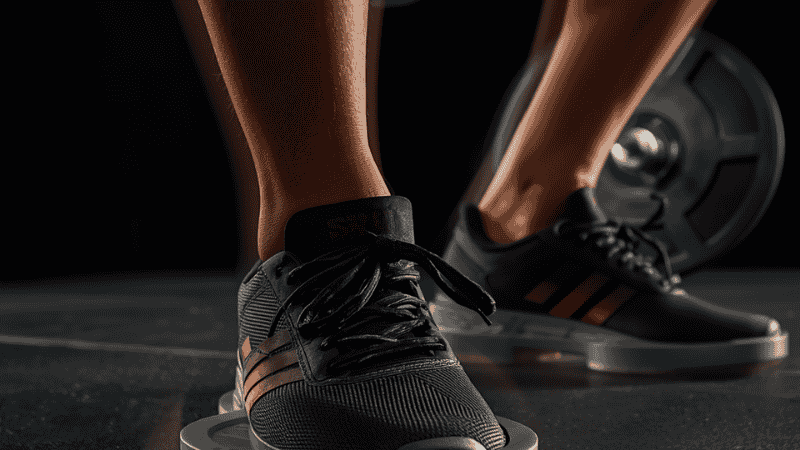
4. What if I can’t go deep enough? Put two small 2.5lb weight plates (or a sturdy book) under your heels. This “heel-elevated” trick fixes ankle mobility issues instantly and lets you squat deeper.
Final Checklist for Your Workout
- [ ] Grip: Weight resting in palms, not fingers.
- [ ] Elbows: Tucked inside the knees at the bottom.
- [ ] Feet: Weight balanced on heels/midfoot.
- [ ] Tempo: 2 seconds down, 1 second pause, explode up.