
Let’s be real for a second: walking into a fitness store or scrolling through Amazon in 2026 can feel like a fever dream. Between the “as-seen-on-TV” folding gadgets and the $5,000 smart mirrors that require a monthly subscription just to turn on, finding the right home gym equipment has become surprisingly complicated. But here’s the secret the big brands don’t want you to know—you don’t need a million dollars to build a pro-level setup. You just need a strategy.
Whether you’re a powerlifter looking to crush PRs in your garage or a busy professional needing a high-intensity corner for daily HIIT, the at home gym equipment you choose acts as the hardware for your software (your body). In this guide, we’re stripping away the marketing fluff to show you exactly what gear is worth your hard-earned cash and how to master home gym equipment exercises that actually move the needle.
The “Buy Once, Cry Once” Philosophy: Choosing At Home Gym Equipment
When shopping for at home gym equipment, it’s tempting to go for the budget option. We’ve all been there. But in the world of fitness, “cheap” often means “unsafe” or “loud.”
At SportZillaX, we advocate for the 11-Gauge Steel Standard. Most budget racks use 14-gauge steel (roughly 2mm thick), which wobbles under heavy loads. Professional-grade gear uses 11-gauge (3mm thick), providing a rock-solid foundation for your heaviest lifts. Investing in quality today means you won’t be replacing broken gear in 2028. High-quality home gym equipment isn’t just a purchase; it’s an asset that retains nearly 70% of its resale value.
Tier 1: The “Must-Have” Essentials for Every Space
If you are starting from zero, these are the pieces of home gym equipment that offer the highest “versatility-to-footprint” ratio.
Adjustable Dumbbells: The Space-Saving Powerhouse
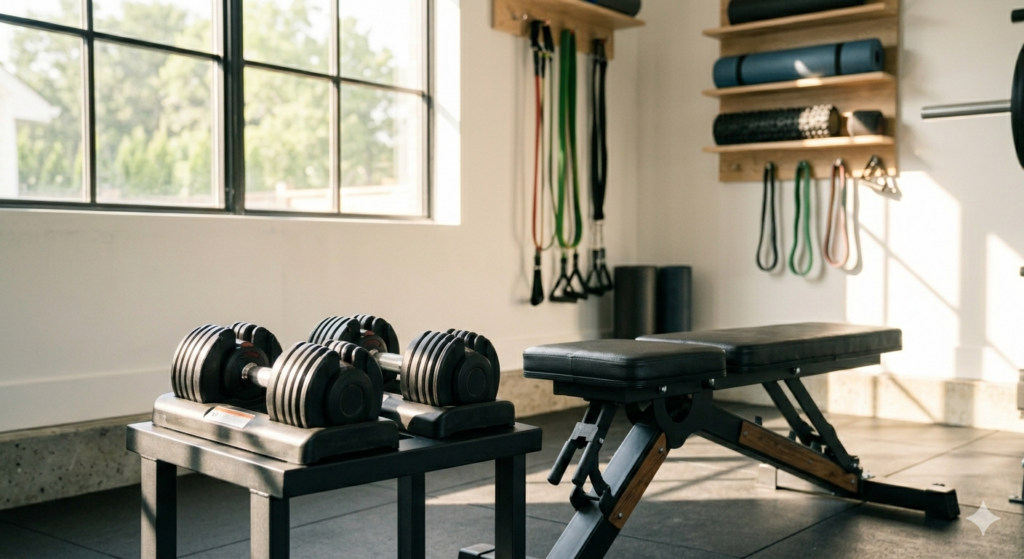
The undisputed king of apartment fitness. A single pair of high-quality adjustable dumbbells can replace an entire rack of 20+ pairs of traditional weights, reclaiming roughly 15-20 square feet of floor space.
- Pro Tip: Look for “Twist-Handle” mechanisms. They allow for faster transitions during drop-sets, keeping your heart rate up and your workout efficient.
The FID Adjustable Bench (Flat, Incline, Decline)
Your bench is the cockpit of your gym. A “FID” bench opens the door to hundreds of home gym equipment exercises, from incline chest presses to Bulgarian split squats. Ensure the padding is high-density foam; cheap soft foam bottoms out, leading to discomfort and poor form under heavy loads.
Tier 2: Leveling Up for Strength and Hypertrophy
Once your foundation is set, it’s time to introduce the “Big Iron.” This is where you transition from “staying active” to “building serious muscle.”
The Olympic Barbell and Bumper Plates
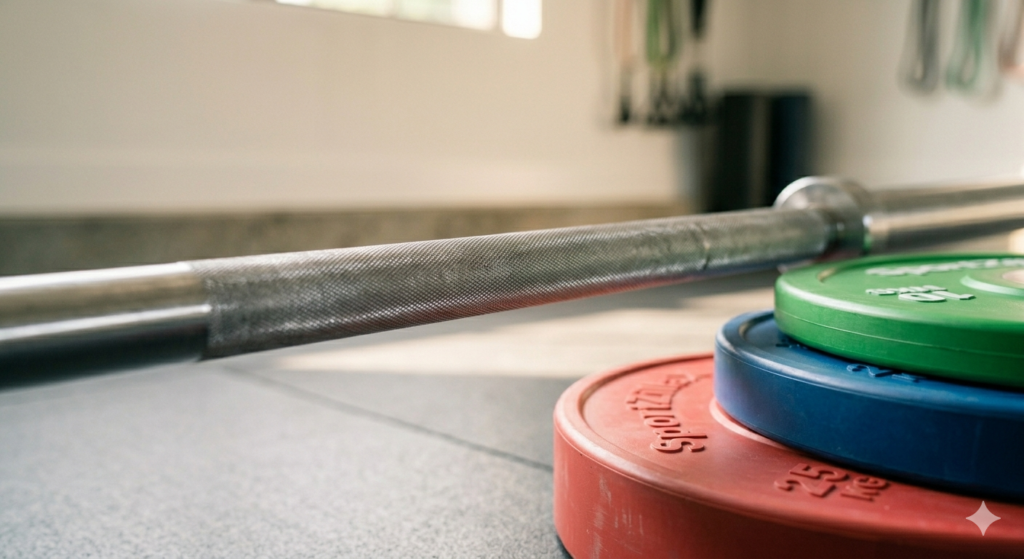
Not all bars are created equal. For at home gym equipment, a 20kg (45 lb) bar with a 28mm diameter is the standard.
- The Case for Bumpers: Even if you aren’t doing Olympic lifts, rubberized bumper plates are essential for home use. They dampen noise by nearly 50% compared to cast iron, keeping your neighbors happy while protecting your floor.
Resistance Bands: The “Invisible” Resistance
Don’t sleep on bands. They provide “accommodating resistance,” meaning the move gets harder as you reach the peak of the contraction. This is scientifically proven to increase muscle fiber recruitment in home gym equipment exercises like bicep curls and lateral walks.
Mastery: Top Home Gym Equipment Exercises for Every Goal
Buying the gear is 20% of the battle; knowing how to use it is the remaining 80%. Here are the high-ROI moves based on 2026 hypertrophy research.
| Equipment | Recommended Home Gym Equipment Exercises | Target Muscle Group |
| Dumbbells | Goblet Squats, Arnold Presses, Renegade Rows | Full Body / Core |
| Barbell | Deadlifts, Landmine Rotations, Floor Press | Power / Strength |
| Bands | Face Pulls, Pull-Aparts, Glute Bridges | Posture / Isolation |
The Floor Press Protocol: If you don’t have a bench yet, the floor press is a hidden gem. It limits shoulder strain while allowing you to move 10% more weight than a standard press, making it a favorite for building tricep thickness.
Maintenance: How to Keep Your Gear in Pro Condition
Sweat is highly acidic (pH 4.0-6.0). If left on your at home gym equipment, it will corrode chrome and degrade upholstery.
- The Daily Wipe: Use a pH-neutral cleaner. Avoid bleach, which cracks rubber.
- Internal Link: For the exact DIY solution we use, check out our Yoga Mat Cleaner Guide. The same principles apply to your weight bench to prevent “gym-acne” and bacteria buildup.
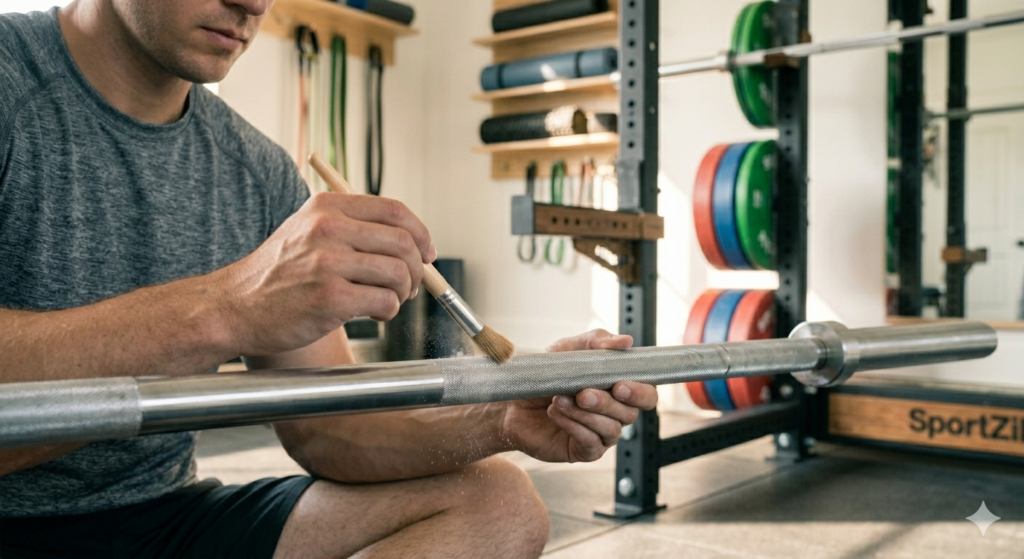
- The Monthly Oil: Apply a light coat of 3-in-One oil to your barbell’s knurling once a month to prevent rust, especially in humid garage environments.
Home Gym Equipment FAQ: Your Burning Questions Answered
Q: Should I buy a rack or a home gym station first? A: If you love “Big Three” lifting, buy a rack. If you prefer isolation and safety (especially training alone), a home gym station with cables is often a better “all-in-one” solution for small spaces.
Q: Is “Smart” gear with screens worth the monthly fee? A: In 2026, many users are switching back to “analog” gear. You can buy a high-quality tablet mount for a fraction of the price and use free apps, saving you $500+ per year in subscriptions.
Q: How do I stop my neighbors from complaining about the noise? A: Vibration is the enemy. Use dual-layer rubber flooring (at least 3/4 inch thick) and stick to bumper plates.
Final Verdict: Investing in Your Future Self
Building your home gym isn’t about spending the most money; it’s about reducing the friction between you and your goals. Whether you start with a single kettlebell or a full Olympic setup, the best home gym equipment is the gear you actually use.
Ready to start your journey? Begin with a solid floor and a versatile pair of dumbbells. Your future self will thank you for the time saved and the gains made.