
You don’t have a treadmill. You live in an apartment with neighbors directly below you. It’s raining outside. You have exactly 20 minutes before the baby wakes up, or before your next work call, or before you talk yourself out of it entirely.
This is the reality of doing cardio at home — and it looks nothing like the YouTube videos with a spacious gym-style room and someone effortlessly bounding through 45 minutes of jumping jacks.
Real home cardio has constraints. Space constraints. Noise constraints. Time constraints. Knee constraints. And the first honest thing we can tell you is: those constraints don’t have to stop you from getting an effective cardiovascular workout. They just change what that workout looks like.
This guide covers the best cardio exercises you can do at home with no equipment, organized by impact level and time available. We’ll give you three complete workout plans — 10 minutes, 20 minutes, and 30 minutes — and answer the question most guides skip: can you actually improve your cardio fitness and support fat loss with home-based workouts? (The answer is yes, and we’ll show you the data.)
Key Takeaways
- The CDC recommends 150 minutes of moderate-intensity cardio per week — three 30-minute home cardio sessions or five 20-minute sessions completely satisfies this guideline
- Research published in the Journal of Exercise Science & Fitness found that low-impact cardio produces comparable cardiovascular adaptations to high-impact training for beginners and intermediate exercisers
- A 20-minute moderate-intensity home cardio session burns approximately 150–200 calories — meaningful but not dramatic; fat loss depends primarily on overall calorie balance
- Low-impact cardio (no jumping, one foot always on the ground) is equally effective for cardiovascular fitness as high-impact — the difference is joint stress, not results
- For apartment dwellers or anyone with downstairs neighbors: every workout in this guide can be done silently, without bothering anyone below
The Myth That’s Holding You Back: “Real Cardio Requires Jumping”
Before the workouts, let’s address the belief that quietly makes people give up on home cardio before they start.
The idea that cardio = jumping, running, or high-impact movement is genuinely incorrect — and it’s one of the most discouraging myths in fitness, especially for people living in apartments, dealing with joint issues, or returning from injury.
Your cardiovascular system doesn’t know or care whether your feet are leaving the ground. It responds to demand — the demand of your heart pumping harder, your lungs working more, your muscles consuming more oxygen. You can create that demand through low-impact movement just as effectively as through jumping, given sufficient intensity and duration.
A 2019 meta-analysis found that low-impact exercise programs produced similar improvements in VO2 max (the primary measure of cardiovascular fitness) compared to high-impact programs in previously sedentary adults. The difference was in injury rates — low-impact had significantly fewer.
Sportzillax editor note: “Low-impact” means low joint stress, not low effort. A standing cardio circuit at a good pace will leave you genuinely breathless. That’s the point.
What Actually Makes Home Cardio Effective
Three variables determine whether a home cardio session actually improves your fitness:
Intensity: Are you working hard enough that your breathing is elevated and conversation becomes difficult? Moderate intensity is the target for most cardio sessions — you can speak in short sentences but not comfortably hold a long conversation.
Duration: Are you sustaining that effort for at least 10–15 consecutive minutes? Brief bursts of effort with long rests are HIIT training (also effective, but different). Steady-state cardio requires sustained effort.
Consistency: Are you doing this 3–5 times per week? The single session matters far less than the accumulated habit over weeks and months.
If you’re checking these three boxes with home workouts — even quiet, low-impact ones — you’re building cardiovascular fitness. Full stop.
The Best Cardio Exercises at Home (No Equipment, No Jumping Required)
These exercises form the building blocks of every workout plan in this guide. All of them can be done in a yoga-mat-sized space, silently enough not to disturb neighbors.
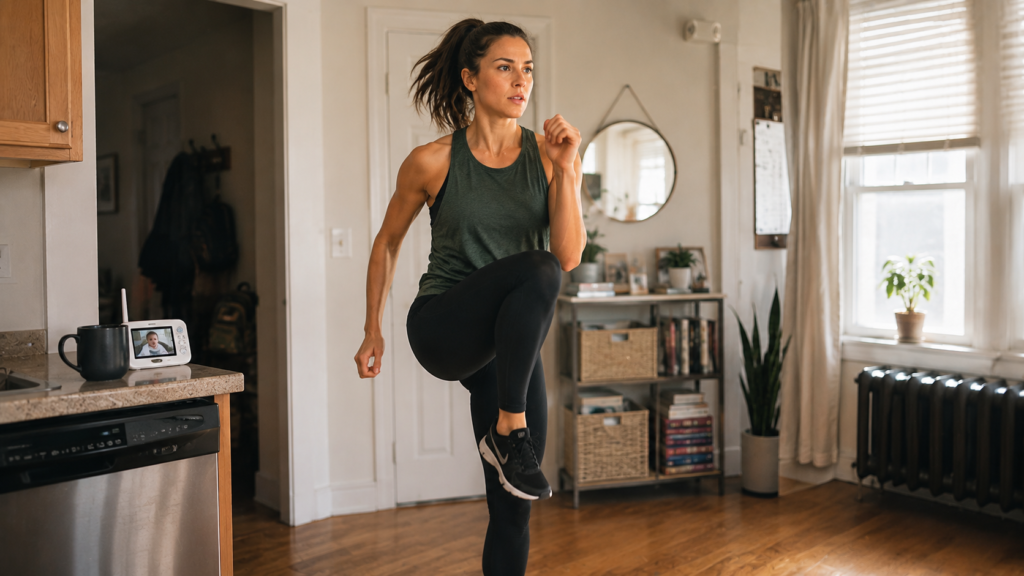
March in Place (High Knees Walking): Drive your knees up toward hip height with each step while pumping your arms. Faster = more intensity. This is the foundation of most standing cardio circuits.
Step Touch: Step one foot out to the side, bring the other foot to meet it, then step the other direction. Add arm movements (raise and lower, or push and pull) to increase intensity. Apartment-friendly, quiet, zero impact.
Standing Side Kick: Balance on one foot, kick the other leg out to the side at hip height. Alternate sides rhythmically. Strengthens the hip abductors while elevating heart rate.
Standing Bicycle: Stand tall, bring one knee up while twisting the opposite elbow toward it (like a standing crunch). Alternate sides at a steady pace. Elevates heart rate, works core.
Squat to Stand: Lower into a squat position, stand fully, step out to one side, return to squat. This flowing movement keeps the lower body engaged continuously without any jumping.
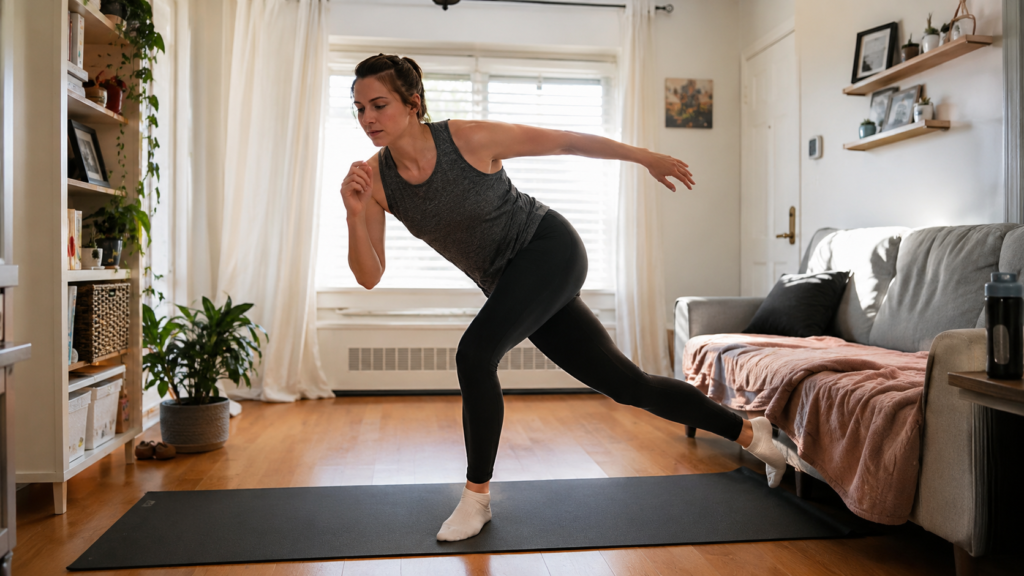
Skater Slide: Step laterally to one side, bringing the opposite leg behind you in a slight lunge. Swing your arms like a speed skater. Mimics skating movement — surprisingly effective for heart rate.
Standing Mountain Climber: Instead of floor-based mountain climbers (which require impact), stand and drive alternating knees toward your chest rapidly while leaning slightly forward. Maintains the cardio effect without the floor contact.
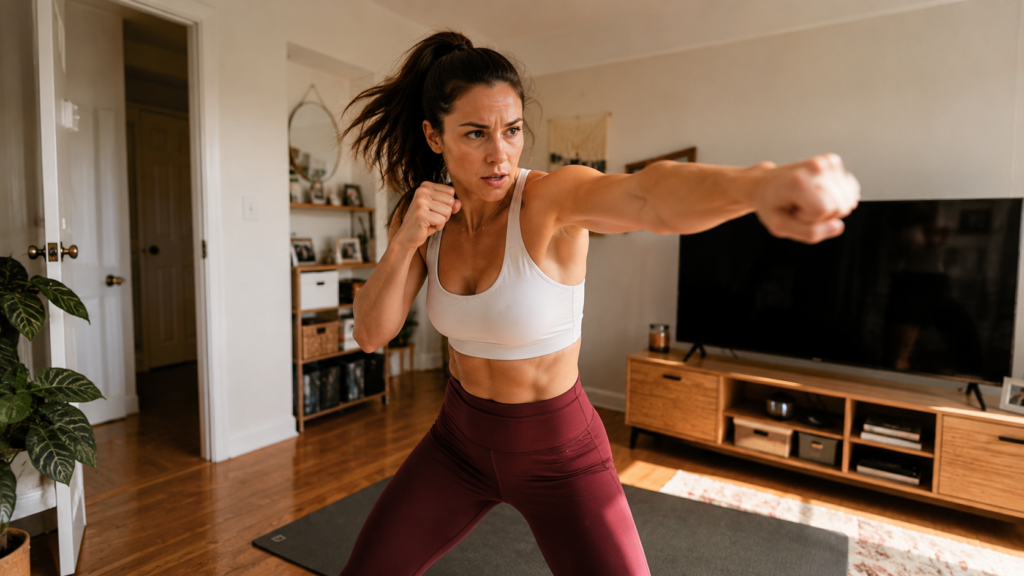
Shadow Boxing: Stand with feet staggered, throw alternating punches forward (jab, cross), add uppercuts and hooks. Move your feet. This is more cardio than most people expect and zero impact.
Stair Climbing (if you have stairs): Simply walking up and down a flight of stairs continuously for 10 minutes is meaningful moderate-intensity cardio. No special movement required.
Seated Cardio (chair-based): For anyone with mobility limitations — seated leg marches, seated punches, seated torso twists at speed. Genuine cardiovascular stimulation from a chair.
Low Impact Cardio at Home: The Complete Guide for Apartment Dwellers
This section is specifically for people who need quiet cardio — no thumping, no neighbors knocking on the ceiling below you, no worried texts from your landlord.
Every exercise listed below involves at least one foot on the ground at all times. Zero impact. Completely silent on a yoga mat or even carpet.
The Low Impact Home Cardio Circuit (repeat for desired duration):
Perform each for 45 seconds with 15 seconds transition:
- March in Place (high knees)
- Step Touch with arm raises
- Standing Bicycle
- Skater Slide
- Shadow Boxing
- Standing Side Kick (alternating)
- Squat to Stand
- Standing Mountain Climber
One complete round = 8 minutes. Two rounds = 16 minutes. Three rounds = 24 minutes.
Intensity adjustment: The speed at which you perform these movements determines the intensity. Moving at 70% of your maximum speed produces moderate-intensity cardio. Moving at 85-90% produces vigorous-intensity cardio. The movements themselves are fully low-impact at any speed.
Your 10-Minute Cardio Workout at Home
For days when time is genuinely short. Ten minutes of sustained moderate-intensity movement is better than zero minutes of perfect exercise that never happens.
Warm-up (2 minutes):
- 60 seconds slow march in place
- 30 seconds arm circles (forward)
- 30 seconds gentle step touch
Main Circuit (7 minutes — 2 rounds of the following):
- March in Place — 45 seconds
- Step Touch with arm raises — 45 seconds
- Standing Bicycle — 45 seconds
- Shadow Boxing — 45 seconds
- Skater Slide — 45 seconds
(Rest 15 seconds between exercises, 30 seconds between rounds)
Cool-down (1 minute):
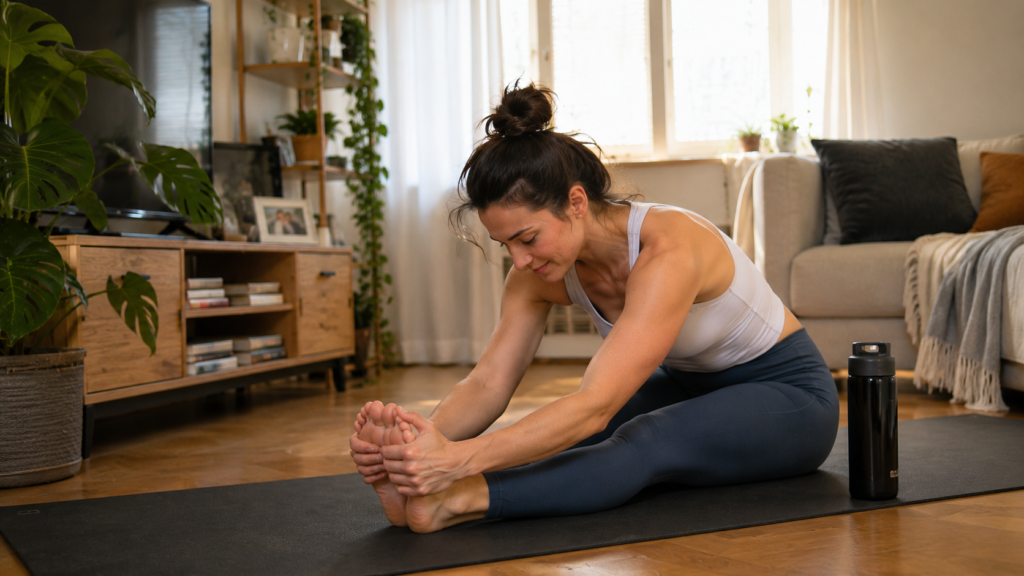
- Slow march → standing forward fold → standing chest stretch
That’s 10 minutes. It counts. Research consistently shows that multiple shorter bouts of exercise accumulate cardiovascular benefits comparably to single longer sessions.
Your 20-Minute Cardio Workout at Home
The most practical option for most home exercisers — long enough to be genuinely effective, short enough to fit into a real day.
Warm-up (3 minutes):
- Slow march in place — 60 seconds
- Step touch — 60 seconds
- Gentle squat to stand — 60 seconds
Main Circuit (15 minutes — 3 rounds): Perform each exercise for 40 seconds with 20 seconds rest:
- March in Place (high knees)
- Skater Slide
- Standing Bicycle
- Shadow Boxing
- Standing Side Kick (alternating)
- Step Touch with overhead press
(60 seconds rest between rounds)
Cool-down (2 minutes):
- Slow march → forward fold → quad stretch → chest opener
A 20-minute cardio workout at home at moderate intensity burns approximately 150–200 calories for most people. Done 4x per week, that’s 600–800 calories per week from cardio alone — meaningful as part of a broader fat loss approach.
Your 30-Minute Cardio Workout at Home
For days when you have more time and want a more complete session.
Warm-up (5 minutes):
- 2 minutes slow march
- 1 minute step touch
- 1 minute standing bicycle (slow)
- 1 minute arm circles + hip rotations
Block 1 — Moderate Intensity (10 minutes, continuous): Rotate through these four exercises, 60 seconds each, repeat:
- March in Place
- Step Touch
- Skater Slide
- Shadow Boxing
Block 2 — Higher Intensity (10 minutes): Perform each for 45 seconds with 15 seconds rest:
- Standing Mountain Climber
- Standing Bicycle (fast)
- Squat to Stand (fast)
- Shadow Boxing (combinations)
- Standing Side Kick (fast, alternating)
(60 seconds rest, repeat block once more)
Cool-down (5 minutes):
- 2 minutes slow walk in place
- Standing forward fold — 30 seconds
- Standing quad stretch — 30 seconds each leg
- Seated forward fold — 30 seconds
- Chest opener — 30 seconds
- Seated spinal twist — 30 seconds each side
Cardio at Home for Weight Loss — What to Actually Expect
Let’s be direct about this, because cardio and weight loss are probably the two most confusing topics in fitness.
Home cardio supports fat loss — but it’s not doing the heavy lifting. Here’s the actual breakdown:
What cardio does well:
- Burns additional calories during and slightly after sessions (post-exercise oxygen consumption)
- Improves cardiovascular health, stamina, and energy levels
- Reduces stress hormones (cortisol) when done at moderate intensity — which indirectly supports fat loss
- Makes higher-intensity exercise progressively easier, which increases future calorie burn
What cardio doesn’t do as well:
- Create a large enough calorie deficit on its own for meaningful fat loss. A 30-minute moderate home cardio session burns 150–250 calories. A single poor nutritional choice can easily exceed that.
- Build the muscle that raises resting metabolic rate. That’s strength training’s job.
The effective combination: 3 days of strength training (dumbbells, resistance bands, or bodyweight) + 3 days of home cardio + a moderate calorie deficit from nutrition = the most effective approach for sustainable fat loss.
Cardio alone, without the nutrition component, rarely produces meaningful weight loss. Cardio as part of a complete approach — including strength training and reasonable nutrition — works very well.
For a complete guide to fat loss that covers this combination in detail, see: How to Lose Fat Without Losing Muscle: The Complete Home Guide
How to Progress Your Home Cardio Over Time
Most people find home cardio gets easier after 3–4 weeks — which is actually a good sign (your cardiovascular system has adapted) but also a signal to increase the challenge.
Ways to progress:
- Increase speed: Do the same exercises at a faster pace
- Reduce rest: Decrease rest periods between exercises by 5–10 seconds
- Increase duration: Add one more round to your circuit
- Add complexity: Combine two movements (squat to side kick, step touch with arm press)
- Add light dumbbells: Holding 2–5 lb dumbbells during cardio movements significantly increases intensity without adding impact
The 10% guideline: Don’t increase total cardio duration or intensity by more than 10% per week to avoid overtraining.
When Home Cardio Might Not Be Enough on Its Own
Home cardio is excellent for most general fitness goals. But consider consulting a doctor or fitness professional if:
- You’ve been completely sedentary for more than 2 years and want to dramatically increase activity
- You experience chest pain, dizziness, or unusual shortness of breath during light cardio
- You have a diagnosed heart condition, hypertension, or are managing diabetes
- You’re postpartum and less than 6 weeks from delivery
These aren’t reasons to avoid cardio — they’re reasons to start with professional guidance.
Frequently Asked Questions
Can I do cardio at home without jumping? Absolutely. Every workout in this guide is completely jump-free and can be done silently. Low-impact cardio (one foot always on the ground) produces the same cardiovascular benefits as high-impact training — the difference is joint stress, not effectiveness. For apartment dwellers, postpartum moms, or anyone with joint concerns, low-impact home cardio is the smart choice.
Is 20 minutes of cardio at home enough to lose weight? Twenty minutes of moderate-intensity cardio burns 150–200 calories, which contributes to a calorie deficit but isn’t sufficient on its own for meaningful fat loss. Combined with strength training (which builds calorie-burning muscle) and reasonable nutrition, 20-minute sessions 3–5x per week are genuinely effective for supporting fat loss. Cardio alone, without the nutrition component, rarely produces dramatic weight loss results.
What’s the best cardio exercise at home with no equipment? For most beginners: march in place (high knees) is the most accessible, zero-equipment, zero-impact starting point. Shadow boxing and the skater slide are the most surprisingly effective for elevating heart rate without equipment or noise. If you have stairs: stair climbing is among the most efficient cardio options available.
How do I do cardio at home without disturbing my downstairs neighbors? Every exercise in this guide is low-impact, meaning at least one foot stays on the ground at all times. Performing them on a yoga mat further reduces any sound transmission. Avoid: jumping jacks, burpees, running in place (foot strikes), and anything involving jumping or rapid landing. The standing circuit format in this guide produces zero audible impact.
How often should I do cardio at home? The CDC recommends 150 minutes of moderate-intensity cardio per week, which translates to five 30-minute sessions or three 50-minute sessions. For beginners, starting with 3 sessions per week of 20 minutes and building from there is a practical and sustainable approach. Rest days between sessions support recovery and prevent overuse issues.
Start Today
You have three complete workouts, zero equipment needed, and options for every time constraint and noise situation.
Start with the 10-minute workout today. Just 10 minutes. Do it again in two days. The week after, try the 20-minute version. The compound effect of this kind of consistent, modest effort over 8–12 weeks is genuinely meaningful — not just for cardiovascular fitness, but for energy, mood, sleep quality, and long-term health.
To combine home cardio with strength training for better fat loss results: → Full Body Dumbbell Workout at Home: The Complete Beginner’s 3-Day Plan
For a structured HIIT option when you want to go harder: → Beginner HIIT Workout at Home: 20 Minutes, No Equipment, Real Results
To understand how cardio fits into a complete fat loss approach: → How to Lose Fat Without Losing Muscle: The Complete Home Guide
References
- Centers for Disease Control and Prevention (CDC). How Much Physical Activity Do Adults Need? https://www.cdc.gov/physicalactivity/basics/adults/index.htm
- Gormley, S.E., et al. (2008). Effect of intensity of aerobic training on VO2max. Medicine & Science in Sports & Exercise.
- Batacan, R.B., et al. (2017). Effects of high-intensity interval training on cardiometabolic health. British Journal of Sports Medicine.
- Swift, D.L., et al. (2014). The role of exercise and physical activity in weight loss and maintenance. Progress in Cardiovascular Diseases.
- Physical Activity Guidelines for Americans, 2nd edition. U.S. Department of Health and Human Services, 2018.